-
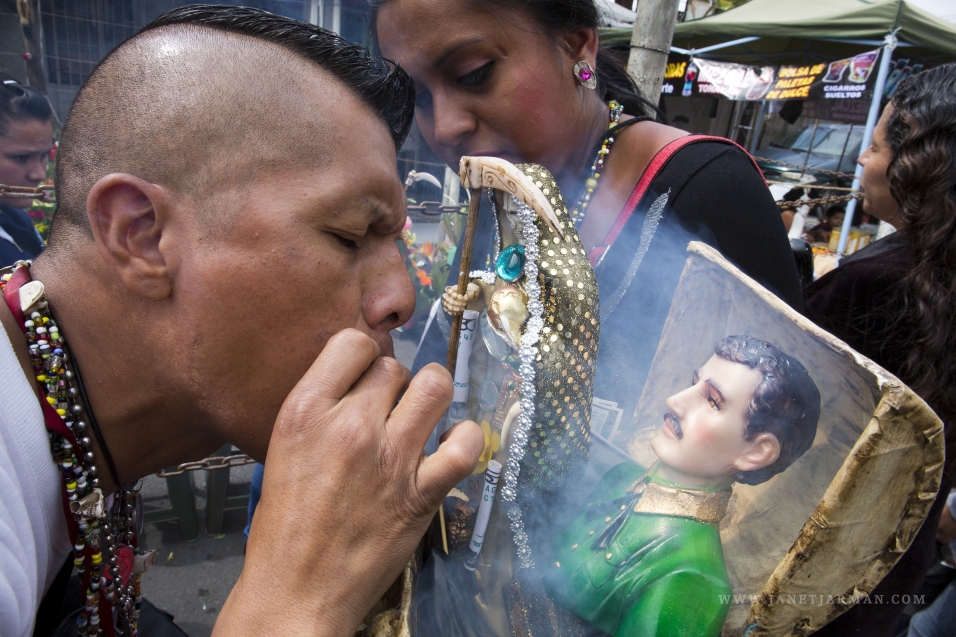
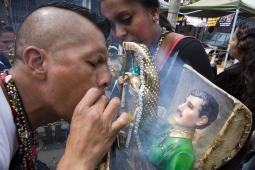
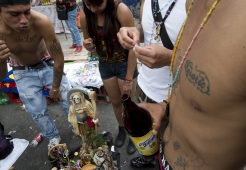
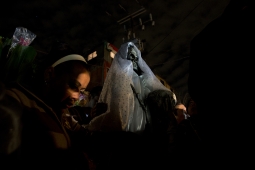
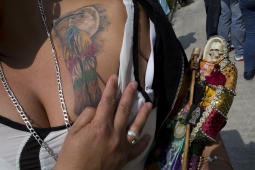
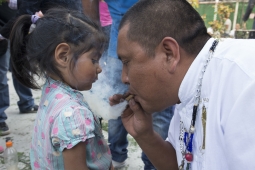
A devotee blows cigar smoke to symbolically “cleanse” figures of the Santa Muerte (L) and Jesus Malverde (R), a Mexican folk hero associated with the drug trade. The devotee is among thousands of attendees at a monthly Rosary service at one of the most famous Santa Muerte shrines in Mexico, located in Tepito, one of Mexico City’s most conflict ridden neighborhoods.
-
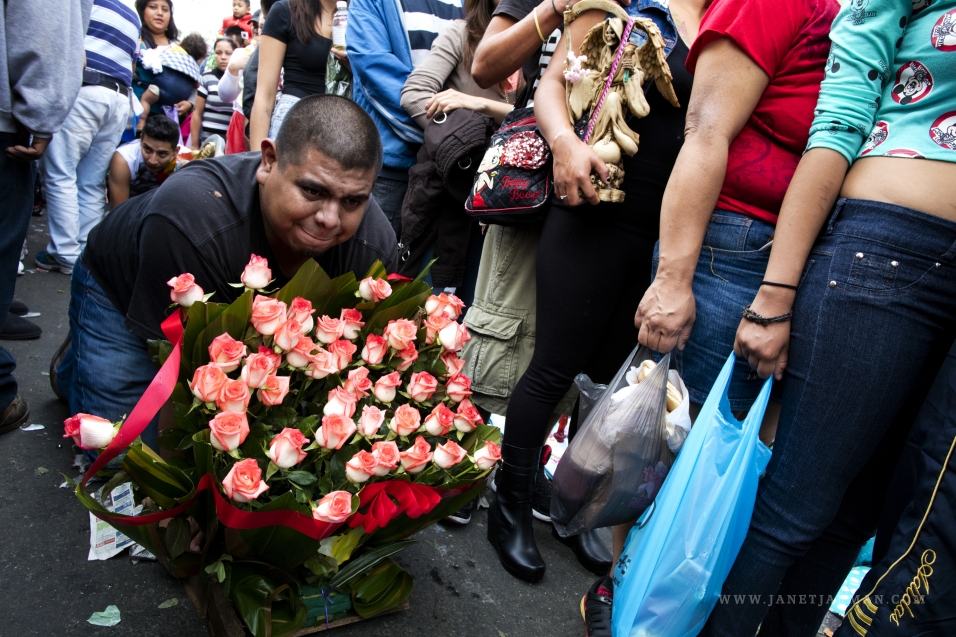
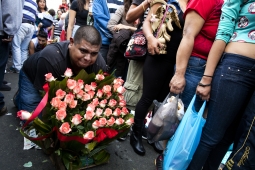
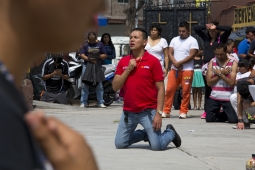
A man named Juan Alberto crawls on his knees several blocks to reach a shrine dedicated to La Santa Muerte (Saint Death), located in the Tepito barrio of Mexico City. He came to the shrine to ask the Santa Muerte to improve his wife’s health. Created by Enriqueta Romero, 70, better known as Doña Queta, the shrine draws thousands of worshippers who come honor The Santa Muerte, a female folk saint depicted as a skeletal figure wearing an elegant robe and usually carrying a scythe and a globe.
-
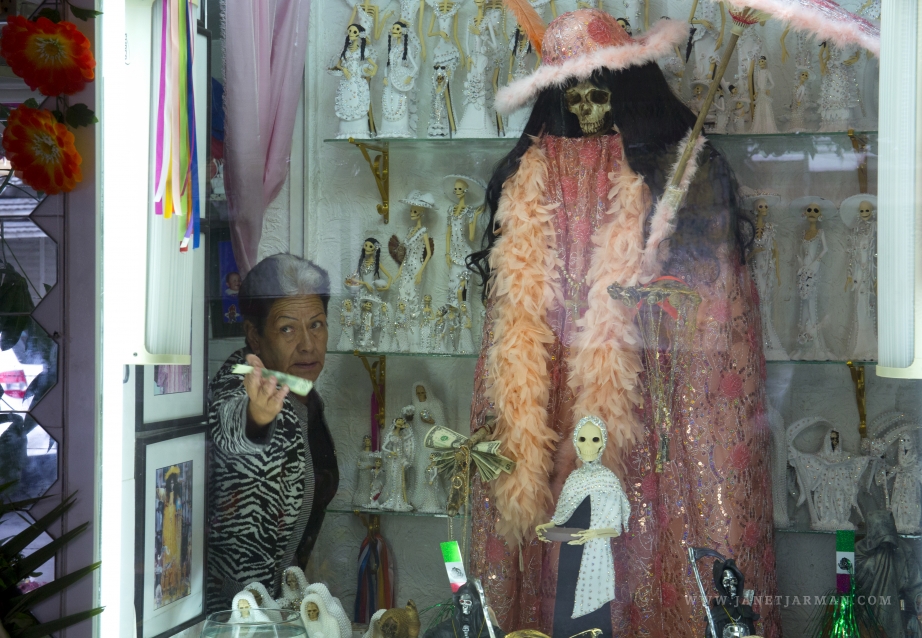
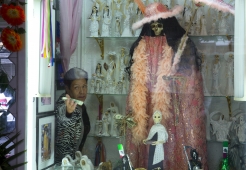
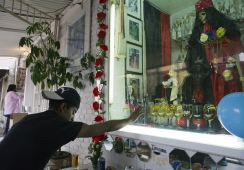
Enriqueta Romero, 70, better known as Doña Queta, accepts a request from worshippers to personally deliver their offering of 200 pesos (USD 12.50) to her beloved Santa Muerte (Saint Death) figure, who stands protected behind thick, green tinted bullet proof glass, at the shrine Romero created in 2001, in Mexico City’s Tepito barrio.
-
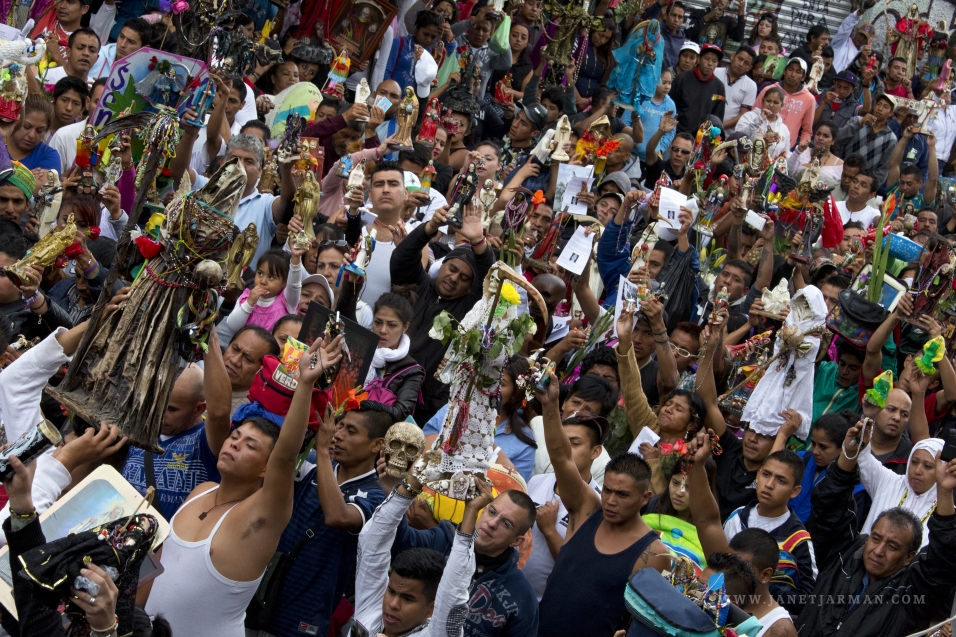
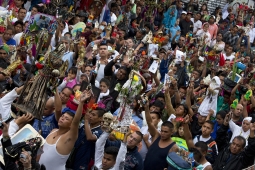
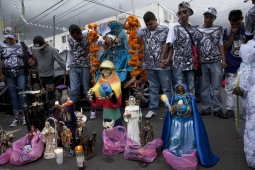
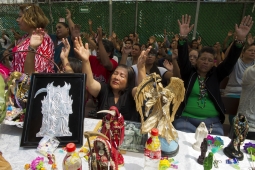
Devotees raise their Santa Muerte (Saint Death) statues during a Rosary service performed at one of the most famous Santa Muerte shrines in Mexico, located in Tepito, long regarded as one of Mexico City’s most conflict ridden neighborhoods. Enriqueta Romero, 70, better known as Doña Queta, created the shrine in 2001. She never imagined that so many people would come to pray. On the first day of every month, thousands of devotees bring their own adorned statues of the saint and pray to her for healing, work, protection and love. Doña Queta seeks to offer a space where the believers, many of whom live on the margins of society, feel strengthened by faith and a sense of community.
-
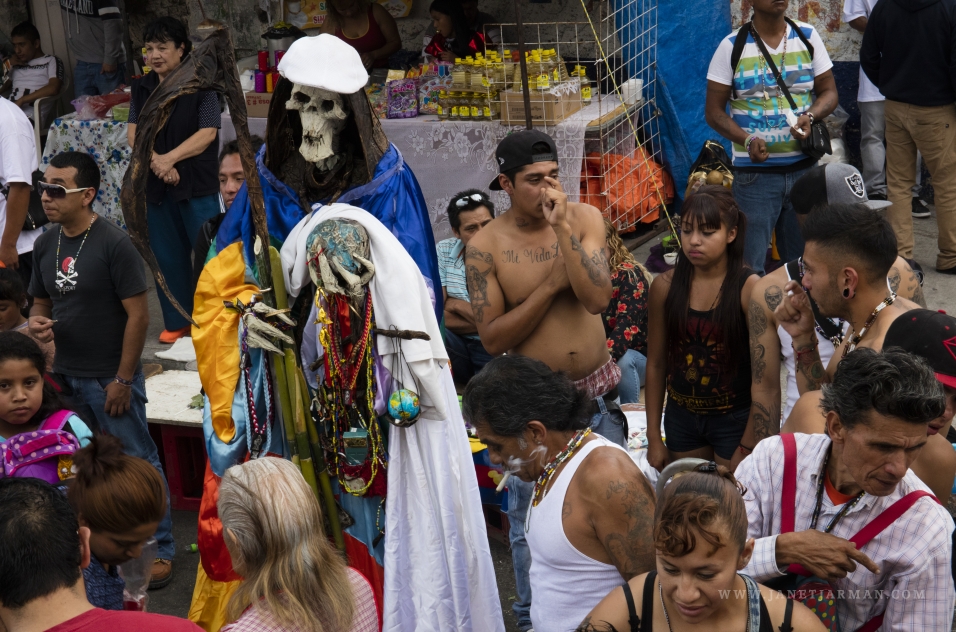
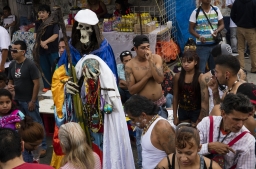
Thousands of Santa Muerte (Saint Death) devotees gather at one of the most celebrated Santa Muerte shrines in all of Mexico, located in Tepito, long regarded as one of Mexico City’s most dangerous neighborhoods. Whereas some followers openly sniff glue and smoke marijuana, the majority of followers comprise families who arrive from all over the country to pray and make offerings to the folk saint.
-
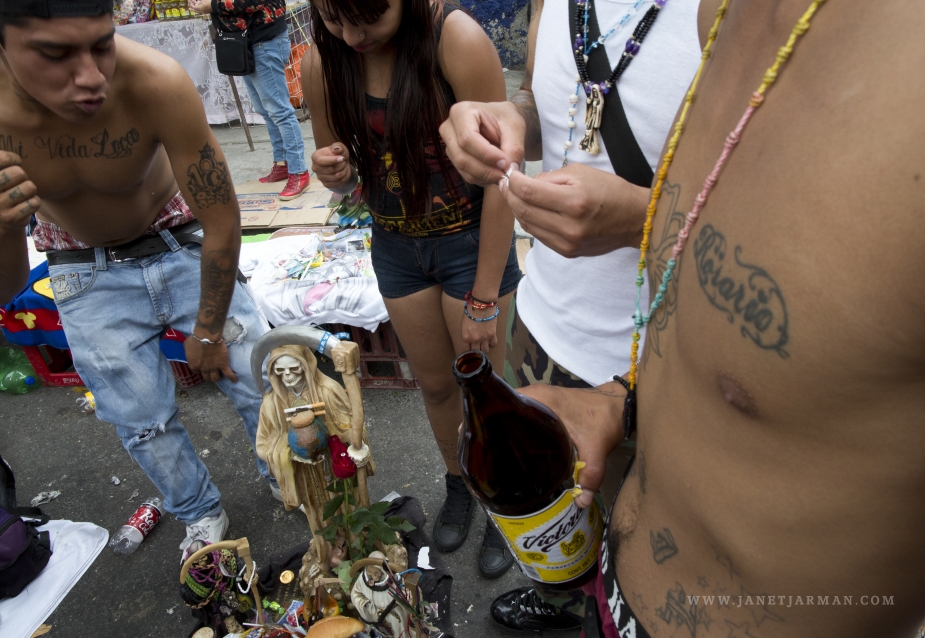
Santa Muerte (Saint Death) devotees gather at one of the most celebrated Santa Muerte shrines in all of Mexico, located in Tepito, long regarded as one of Mexico City’s most dangerous neighborhoods. Whereas some followers openly sniff glue and smoke marijuana, the majority of followers comprise families who arrive from all over the country to pray and make offerings to the folk saint.
-
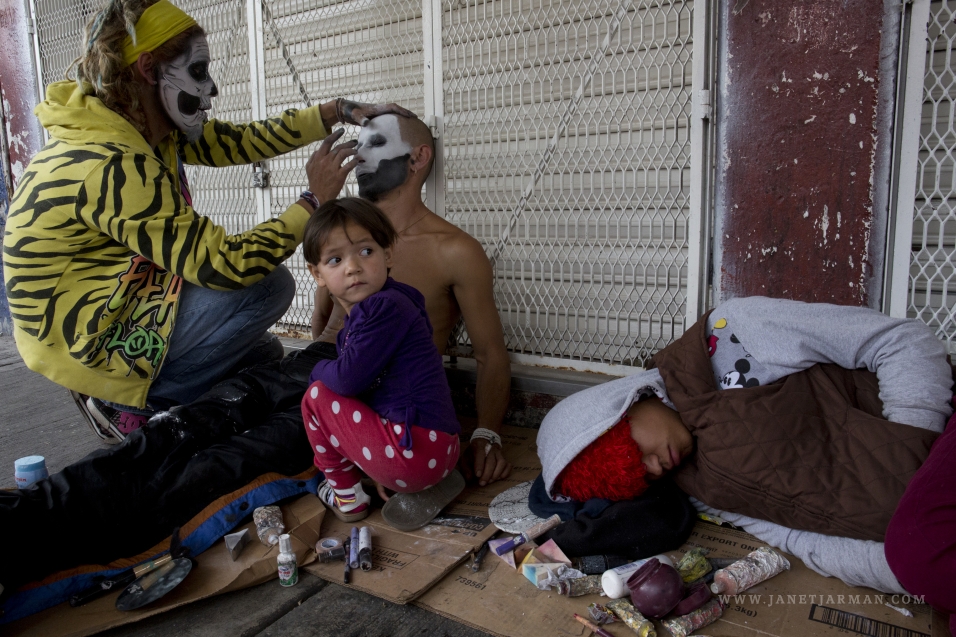
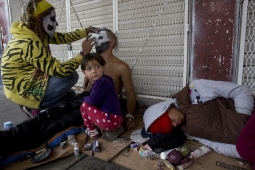
Mikey Perez (L) paints the face of his friend, Rocio Herrera (R) while mingling with thousands of fellow Santa Muerte (Saint Death) followers gathered to celebrate the anniversary of one of Mexico’s most famous Santa Muerte shrines. Started by Enriqueta Romero on October 31, 2001, the popular shrine attracts thousands of devotees from all over Mexico during its yearly anniversary celebration and on the first day of every month, when Romero’s son offers Rosary services. This family walked 27 kilometers to reach the shrine.
-
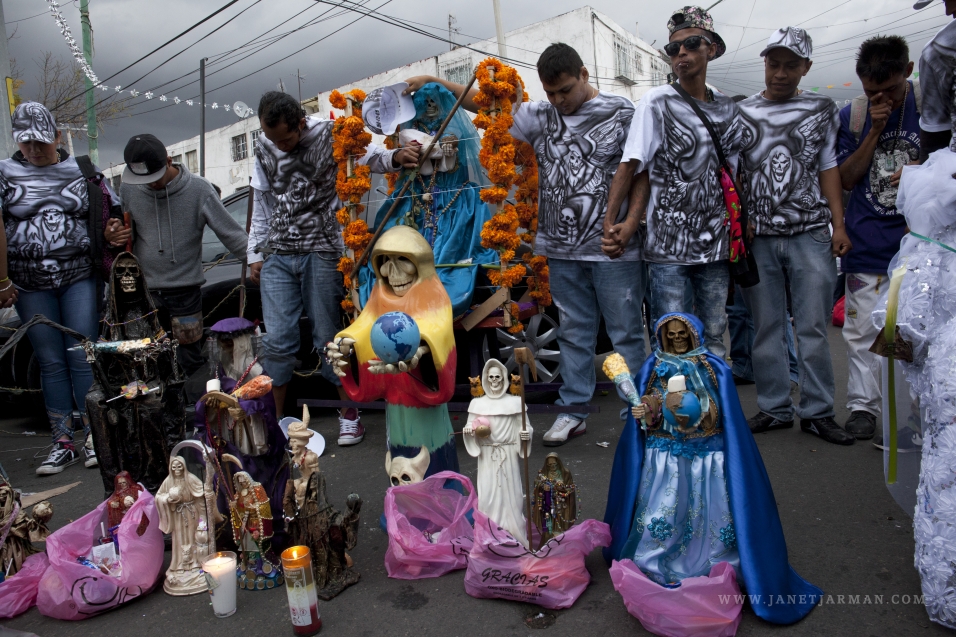
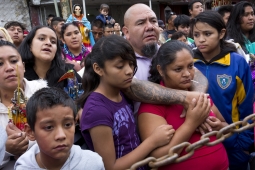
A group of Santa Muerte (Saint Death) devotees stands in solidarity during an important annual anniversary Rosary service at the famous shrine created by Enriqueta Romero, 70, in Tepito, one of Mexico City’s most conflict ridden neighborhoods. The anniversary is special, since devotees arrive during the day of 31 October to pay respects to the Santa Muerte and attend a midnight Rosary at the shrine. They typically spend the night in the streets and continue worshipping the next day, 1 November, that coincides with Mexico’s Day of the Dead.
-
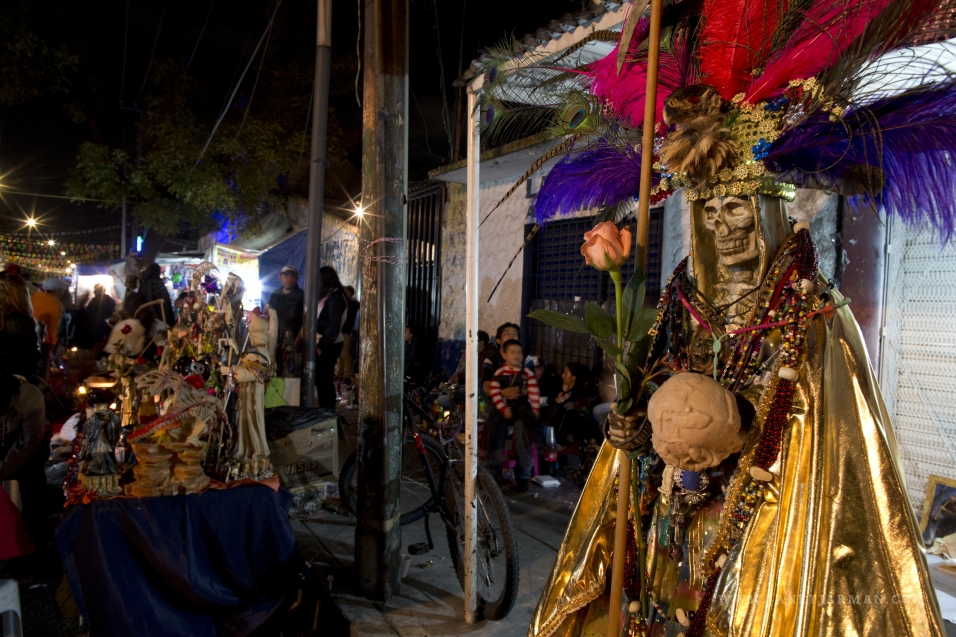
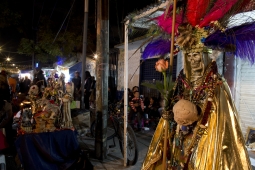
Devotees linger in the streets in the early morning after a midnight Rosary service that marked the 14th anniversary of one of Mexico’s most famous shrines dedicated to the folk saint Santa Muerte (Saint Death). The female folk saint is typically depicted as a skeletal figure wearing an elegant robe and carrying a scythe and a globe. Followers express their devotion by elaborately adorning their personal saint statues (pictured) which they bring with them to prayer ceremonies and celebrations.
-
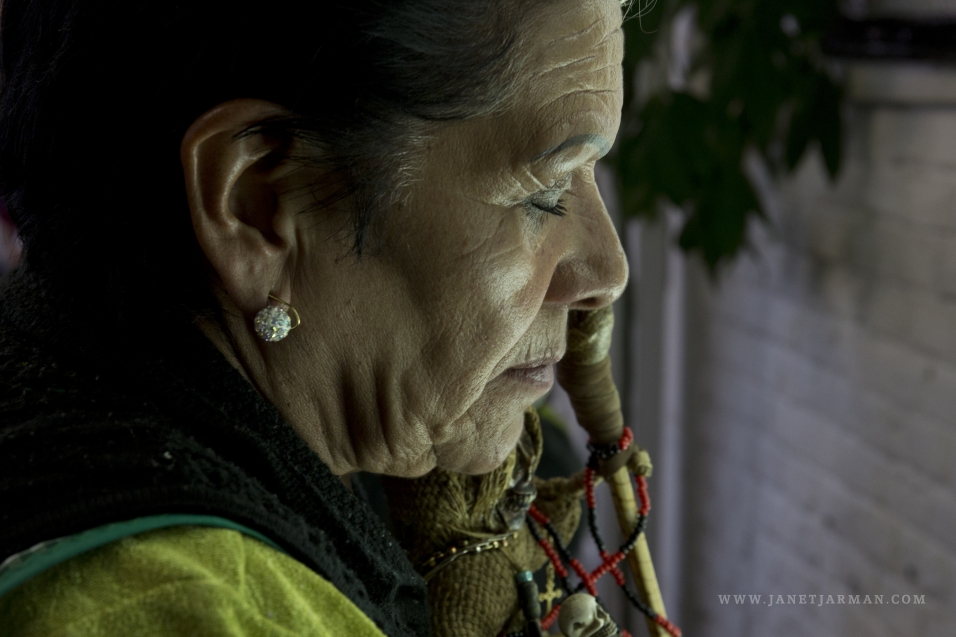
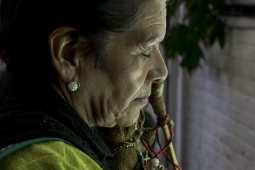
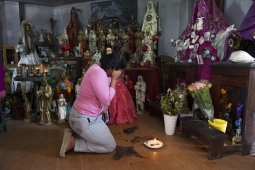
Enriqueta Romero, 70, enjoys a quiet moment of prayer during a two day anniversary celebration she and her family hold at the Santa Muerte (Saint Death) shrine outside their home in Mexico City’s Tepito district, long regarded as one of the city’s most dangerous neighborhoods. The shrine draws thousands of worshippers from all over Mexico. Most come during a special Rosary service on the first day of every month. Romero believes it is okay to worship multiple saints. She is deeply devoted to the Santa Muerte; however, for her, “God is still ‘number one’ above all others”, she said.
-
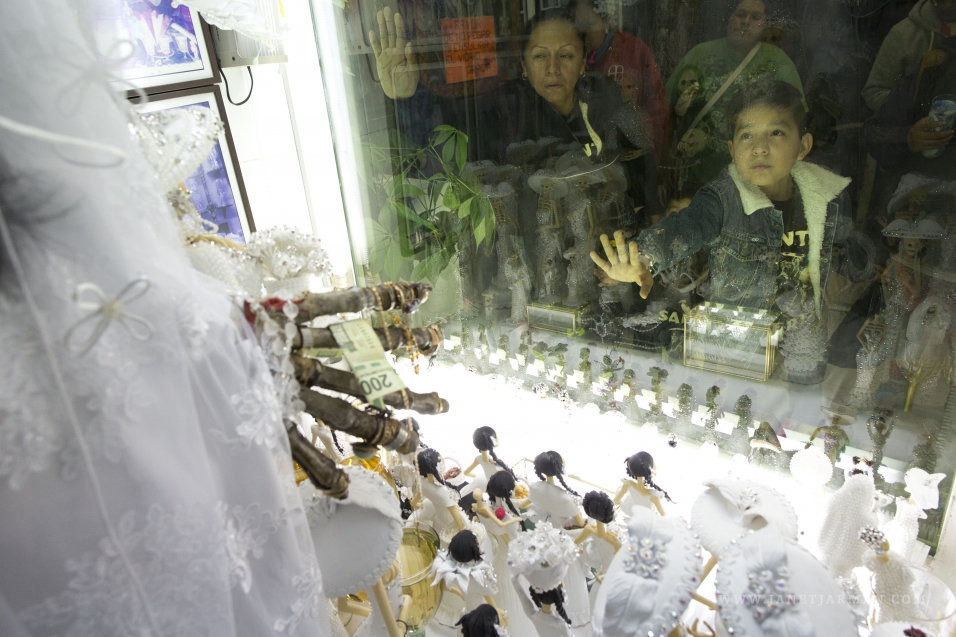
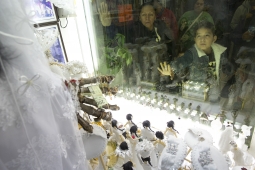
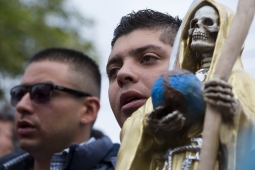
A young boy gazes at a white cloaked skeleton figure of the Santa Muerte (Saint Death) at one of Mexico’s most famous Santa Muerte shrines, located in Mexico City’s Tepito barrio and started by Enriqueta Romero in 2001. The boy was among thousands of families and individuals who came to pay respect to Romero’s Santa Muerte shrine during an important overnight celebration that takes place each year from 31October to 1 November.
-
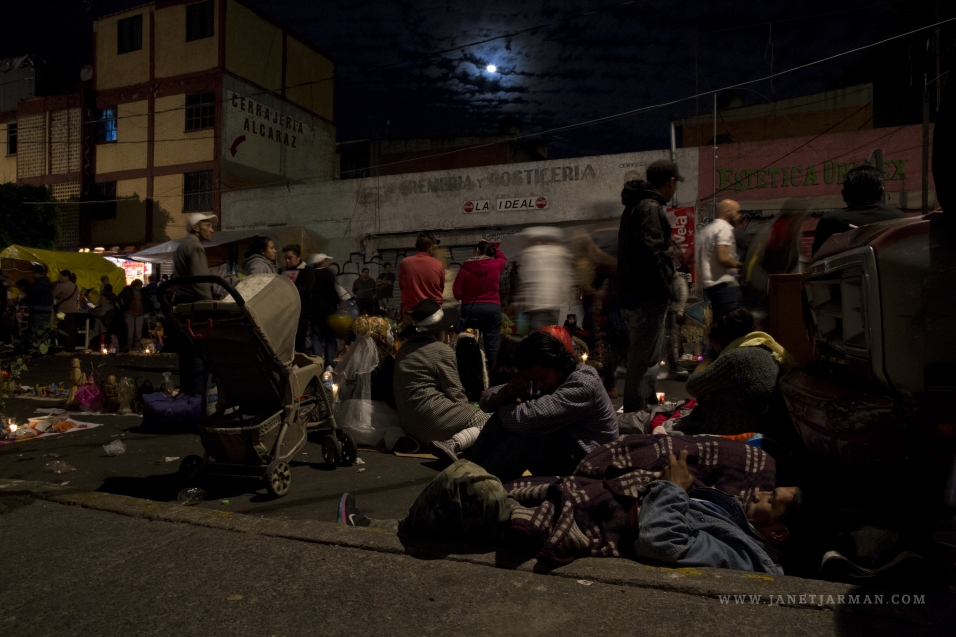
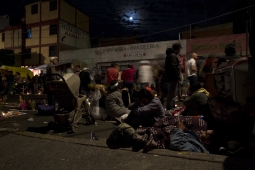
Devotees prepare to spend the night in the streets after a midnight Rosary service held at one of the most famous Santa Muerte (Saint Death) shrines in Mexico, started by Enriqueta Romero in Mexico City’s Tepito barrio in 2001. They are among thousands of families and individuals who come to pay respect to Romero’s Santa Muerte shrine during an important overnight celebration that takes place each year from 31 October to 1 November.
-
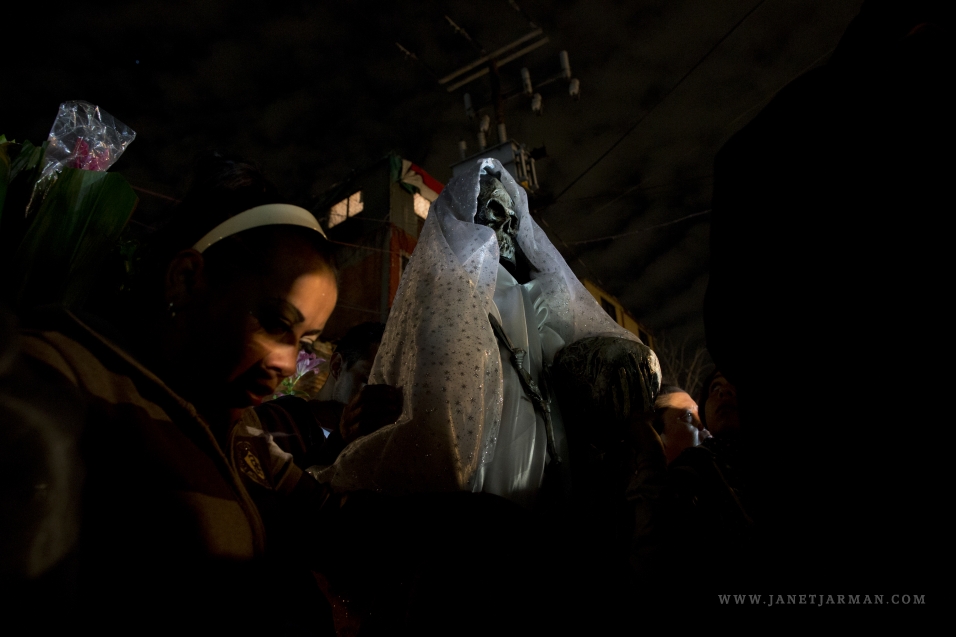
Holding onto Santa Muerte (Saint Death) statue in an expression of devotion, worshippers listen and pray during a midnight Rosary service attended by over a thousand devotees one of the most famous Santa Muerte shrines, started in 2001 by Enriqueta Romero in Mexico City’s Tepito barrio.
-
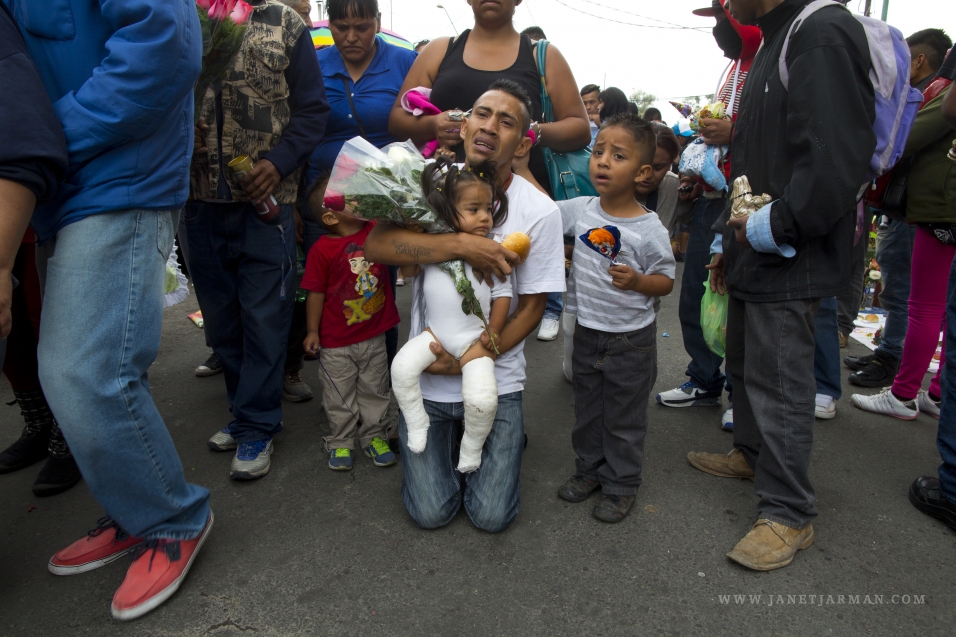
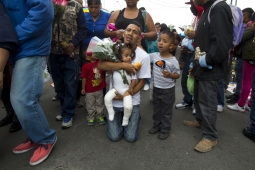
A man carries his daughter, who was born unable to walk. Each month, he joins his wife and children to attend a Rosary service performed at one of the most famous Santa Muerte shrines in Mexico, located in Tepito, long regarded as one of Mexico City’s most dangerous neighborhoods. Created by Enriqueta Romero, 70, better known as Doña Queta, the shrine draws thousands of worshippers who come honor The Santa Muerte (Holy Death), a female folk saint depicted as a skeletal figure wearing an elegant robe and usually carrying a scythe and a globe. Santa Muerte followers are often those marginalized by society or excluded by the the formal economic system. Their prayers might focus on work, health or survival or love. Some followers claim that The Santa Muerte can perform miracles.
-
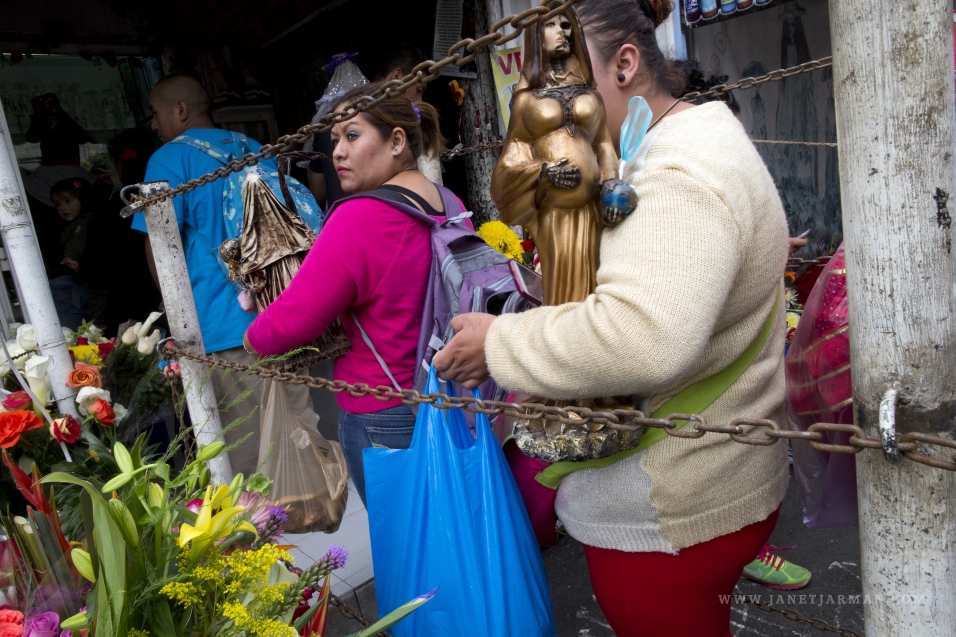
Devotees holding pregnant Santa Muerte statues arrive at a Rosary service at one of the most famous Santa Muerte shrines in Mexico, located in Tepito, long regarded as one of Mexico City’s most dangerous neighborhoods. Enriqueta Romero, 70, better known as Doña Queta, created the shrine in 2001 by placing a statue of the Santa Muerte, a gift from her son, outside her home. She never imagined that so many devotees would come to pray. Today, her shrine attracts thousands. Most come to a Rosary delivered on the first day of every month, but they are welcome to pray there on any day said Doña Queta.
-
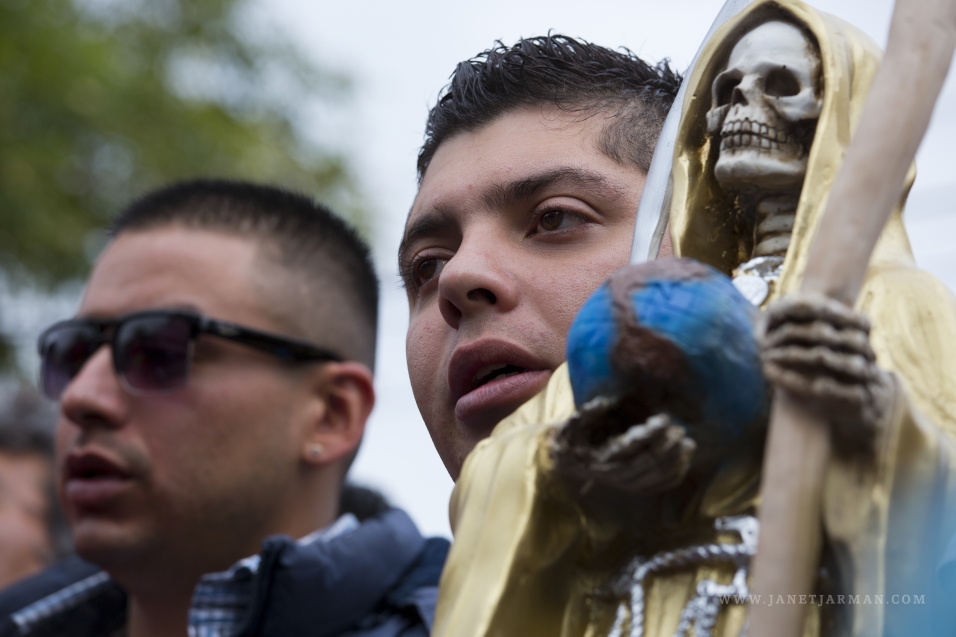
Devotees, including individuals and families, listen during a monthly Rosary service performed at one of the most famous Santa Muerte shrines in Mexico, located in Tepito, long regarded as one of Mexico City’s most dangerous neighborhoods. Enriqueta Romero, 70, better known as Doña Queta, created the shrine in 2001 by placing a statue of the Santa Muerte, a gift from her son, outside her home. She never imagined that so many devotees would come to pray. Today, her shrine attracts thousands of worshippers. Most come to a Rosary service delivered by her son on the first day of every month, but they are welcome to pray there at any time, said Queta.
-
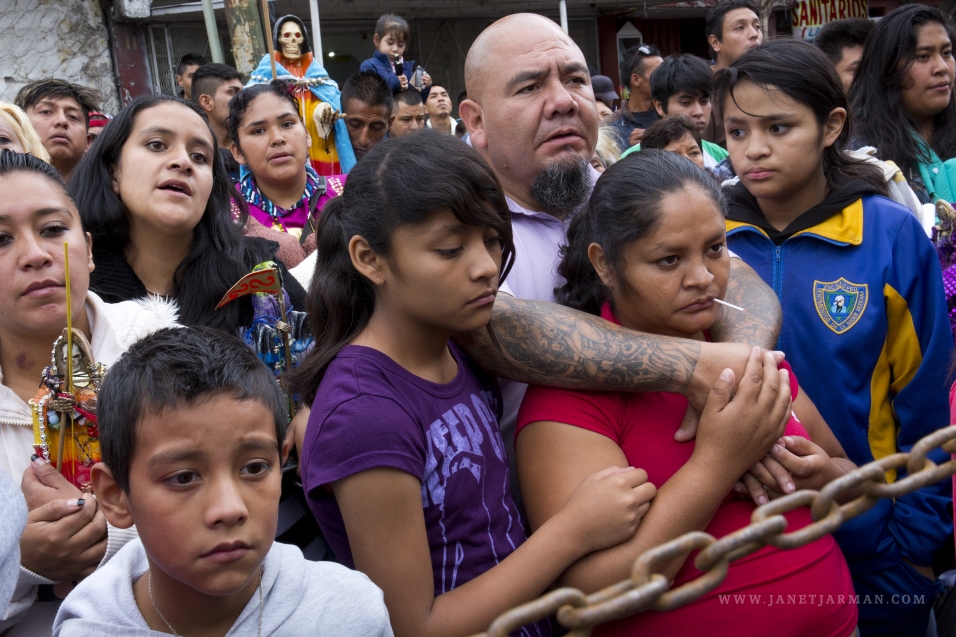
Devotees, including women, men and families, listen during a monthly Rosary service performed at one of the most famous Santa Muerte shrines in Mexico, located in Tepito, long regarded as one of Mexico City’s most dangerous neighborhoods. Enriqueta Romero, 70, better known as Doña Queta, created the shrine in 2001 by placing a statue of the Santa Muerte, a gift from her son, outside her home. She never imagined that so many devotees would come to pray. Today, her shrine attracts thousands of worshippers. Most come to a Rosary service delivered by her son on the first day of every month, but they are welcome to pray there at any time, said Queta.
-
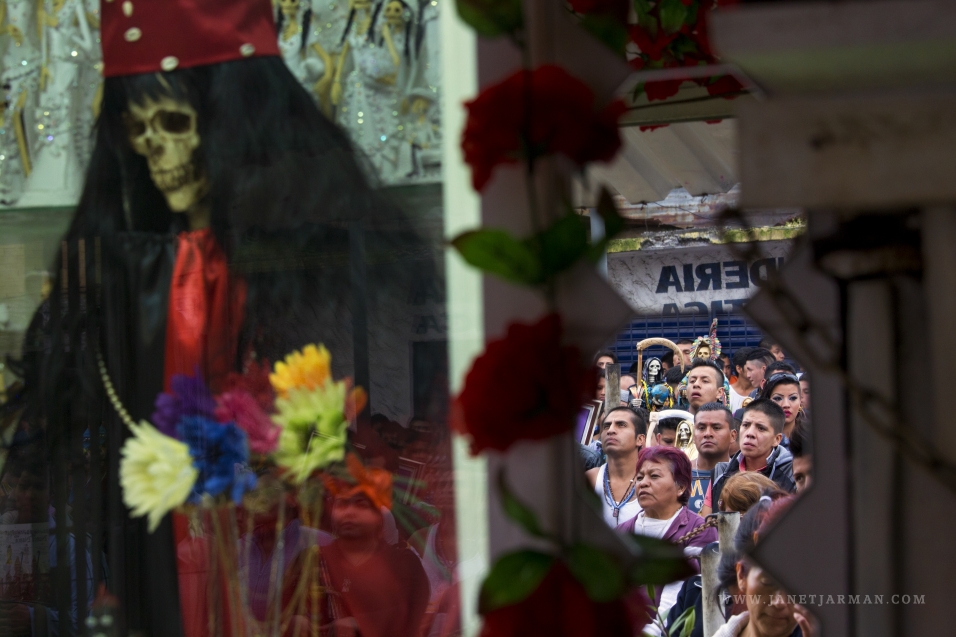
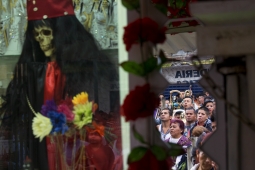
Devotees, including women, men and families, listen during a monthly Rosary service performed at one of the most famous Santa Muerte shrines in Mexico, located in Tepito, long regarded as one of Mexico City’s most dangerous neighborhoods. Enriqueta Romero, 70, better known as Doña Queta, created the shrine in 2001 by placing a statue of the Santa Muerte (pictured on left), a gift from her son, outside her home. She never imagined that so many devotees would come to pray to her shrine, to pray to her statue, situated behind a green tinted bullet proof window and visible always to the public. Most come to a Rosary service delivered by Doña Queta's son on the first day of every month, but they are welcome to pray there at any time, said Queta.
-
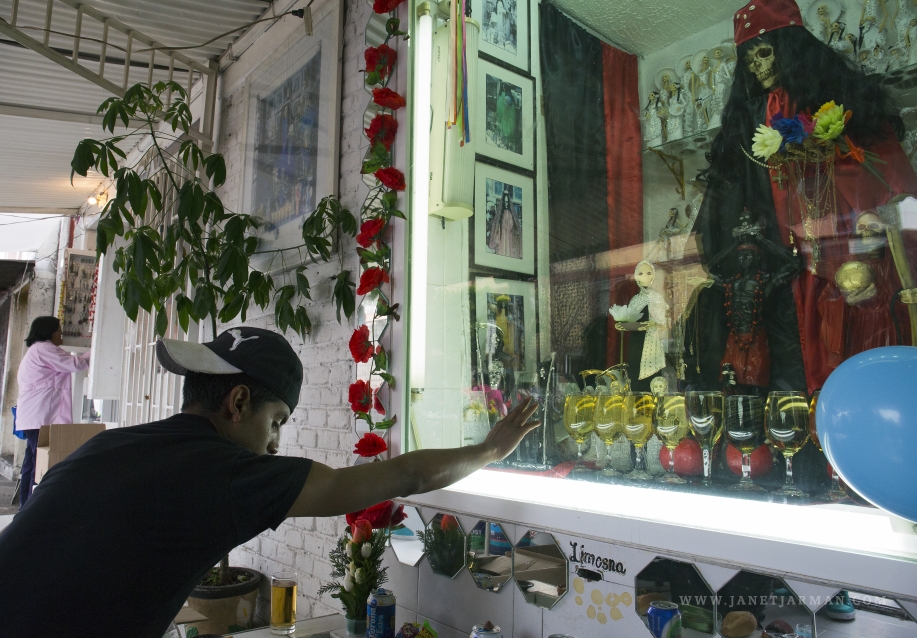
A worshipper prays in front of a figure of the Santa Muerte (Holy Death) at one of the most famous Santa Muerte shrines in Mexico, located in Tepito, long regarded as one of Mexico City’s most dangerous neighborhoods. Enriqueta Romero, 70, better known as Doña Queta, created the shrine in 2001 by placing a statue of the Santa Muerte, a gift from her son, outside her home. She never imagined that so many devotees would come to pray to the statue, situated behind green tinted bullet proof glass and perpetually visible to the public. Today, her shrine attracts thousands of worshippers. Most come to a Rosary delivered on the first day of every month, but they are welcome to pray there on any day said Doña Queta.
-
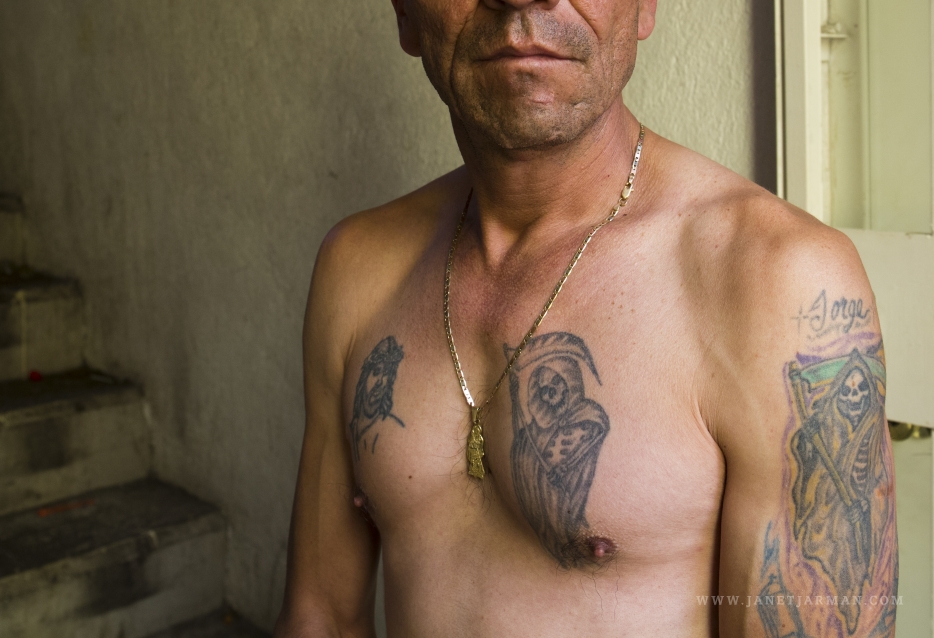
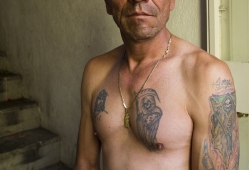
A Mexico City man sits on the steps of his home, in Valle Gomez, considered one of Mexico City’s most dangerous neighborhoods. After spending nine years in prison and receiving numerous gunshot wounds, he is convinced that he is still alive because the Santa Muerte has been protecting him. Out of prison at last, the man, who wishes not to be named, prays fervently to the Santa Muerte to help him stay on the right path. He also asks her to help his younger sister, who is also serving time in prison. His reverence for the Santa Muerte and also for Jesus Christ is evidenced by his tattoos.
-
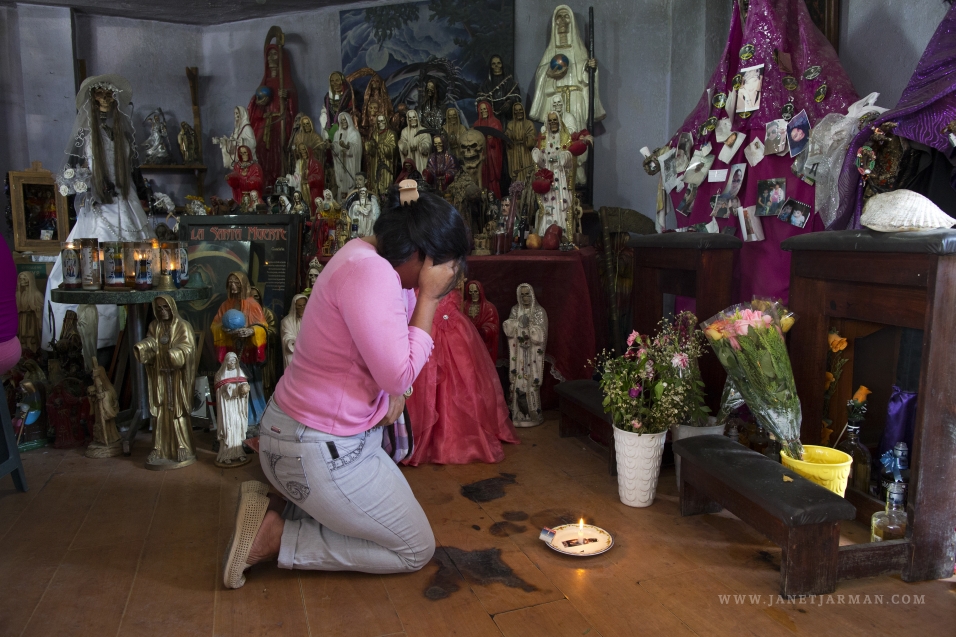
Inside The International Temple of Santa Muerte, located in the State of Mexico that borders Mexico City, a devotee of Santa Muerte prays while performing a ritual to help her father, whose lover, she claims, has caused his illness, according to a temple volunteer. The temple was inaugurated in December, 2007 by Jonathan Legaria Vargas, who was months later gunned down while driving nearby. His mother, Enriqueta Vargas eventually took over leadership of the temple, hoping to carry on his mission. Hundreds of devotees worship at the temple each Sunday. The temple is open during the week also, offering a place where Santa Muerte followers can pray, receive a cleansing or “limpia,” or purchase an array of religious ephemera, including elaborate replicas of the Santa Muerte, ranging from pocket size to up to two meters in height.
-
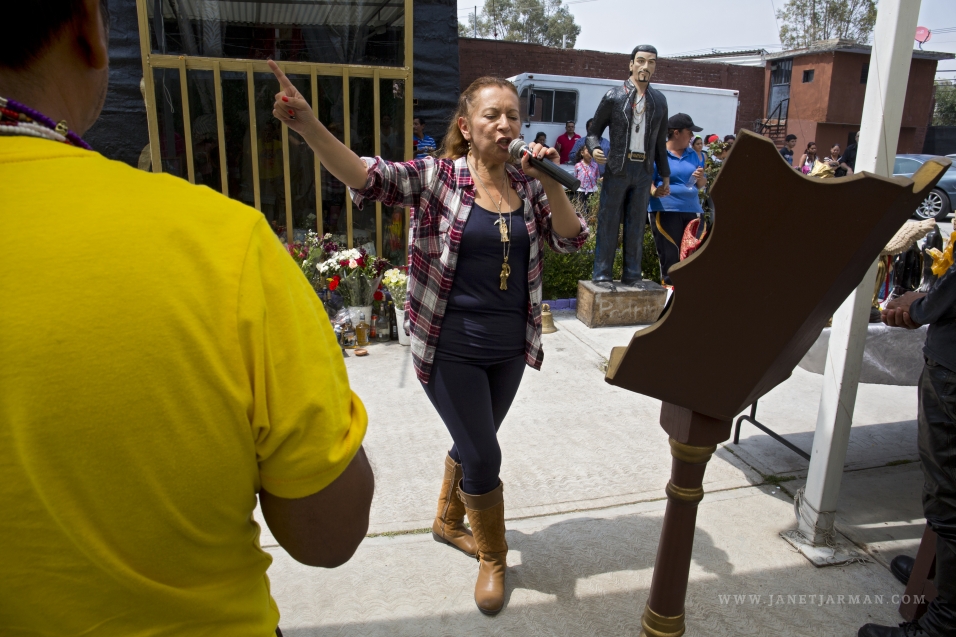
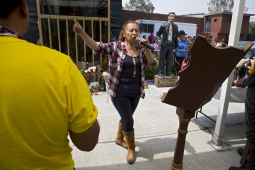
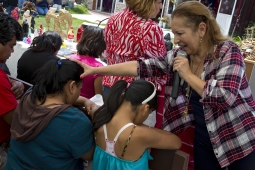
Enriqueta Vargas, leads a Sunday prayer service at The International Temple of Santa Muerte, located in the State of Mexico that borders Mexico City. The temple was inaugurated in December, 2007, by her son, Jonathan Legaria Vargas, who was gunned down while driving nearby, months later in July, 2008. Vargas eventually took over leadership of the temple after his death, hoping to carry on the mission of her son. Her ascension was fraught with difficulties, since many men wanted to take the powerful position, she said. Despite their efforts to undermine her, Vargas has won the hearts and minds of the many followers her son had inspired, and more. The leader, who grew up in a strict Catholic household in Mexico’s Hidalgo state, had never associated with the Santa Muerte. She had an idea that her son had started the Temple, months before his death, but they both decided to avoid the topic, she said.
-
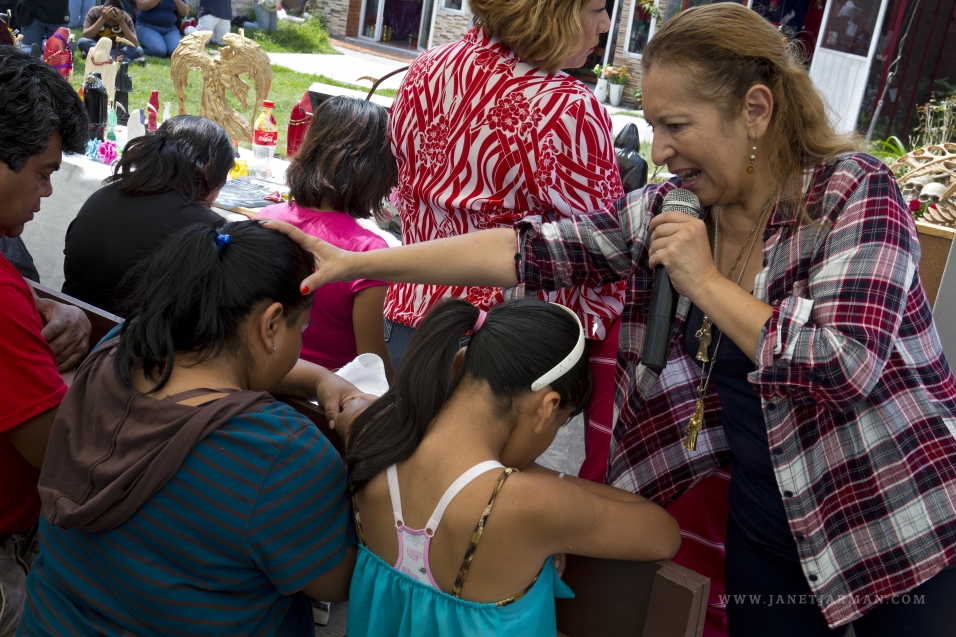
Enriqueta Vargas, leads a Sunday prayer service at The International Temple of Santa Muerte, located in the State of Mexico that borders Mexico City. The temple was inaugurated in December, 2007, by her son, Jonathan Legaria Vargas, who was gunned down while driving nearby, months later in July, 2008. Vargas eventually took over leadership of the temple after his death, hoping to carry on the mission of her son. Her ascension was fraught with difficulties, since many men wanted to take the powerful position, she said. Despite their efforts to undermine her, Vargas has won the hearts and minds of the many followers her son had inspired, and more. The leader, who grew up in a strict Catholic household in Mexico’s Hidalgo state, had never associated with the Santa Muerte. She had an idea that her son had started the Temple, months before his death, but they both decided to avoid the topic, she said.
-
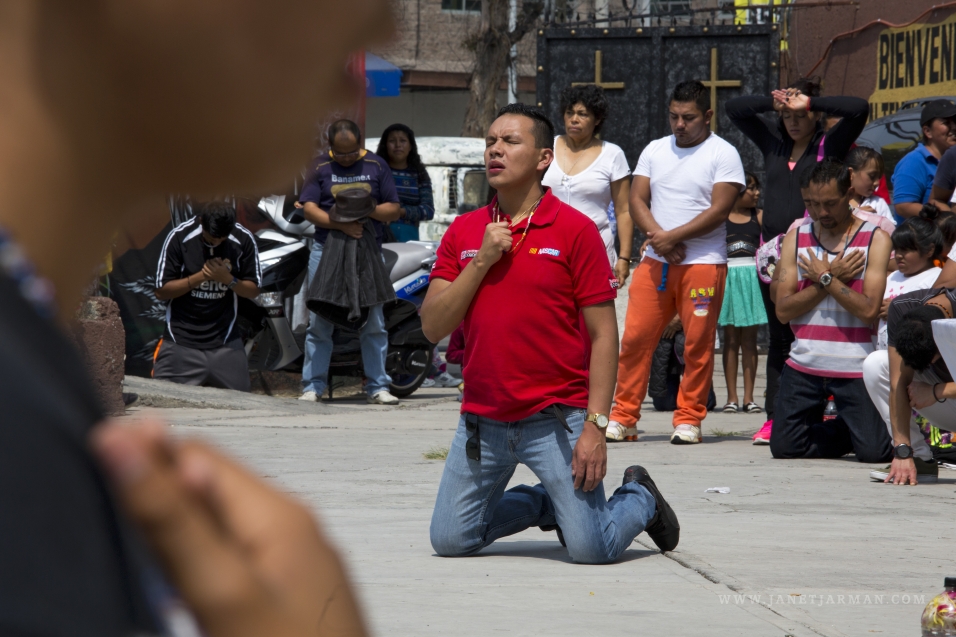
Devotees pray to the Santa Muerte (Saint Death) during a service at The International Temple of Santa Muerte, located in the State of Mexico that borders Mexico City. The temple is open during the week also, offering a place where Santa Muerte followers can pray, receive spiritual cleanings called “limpias,” or purchase an array of religious ephemera, including elaborate replicas of the Santa Muerte of all sizes up to two meters tall. Although the practice of worshipping the Santa Muerte has been denounced by the Catholic Church as blasphemous, the cult has seen a marked increase in followers in Mexico during the last decade, with a now estimated 12 million followers in Mexico, Central America and the southwestern United States, according to religion scholar Andrew Chesnut, who has written a book about Santa Muerte.
-
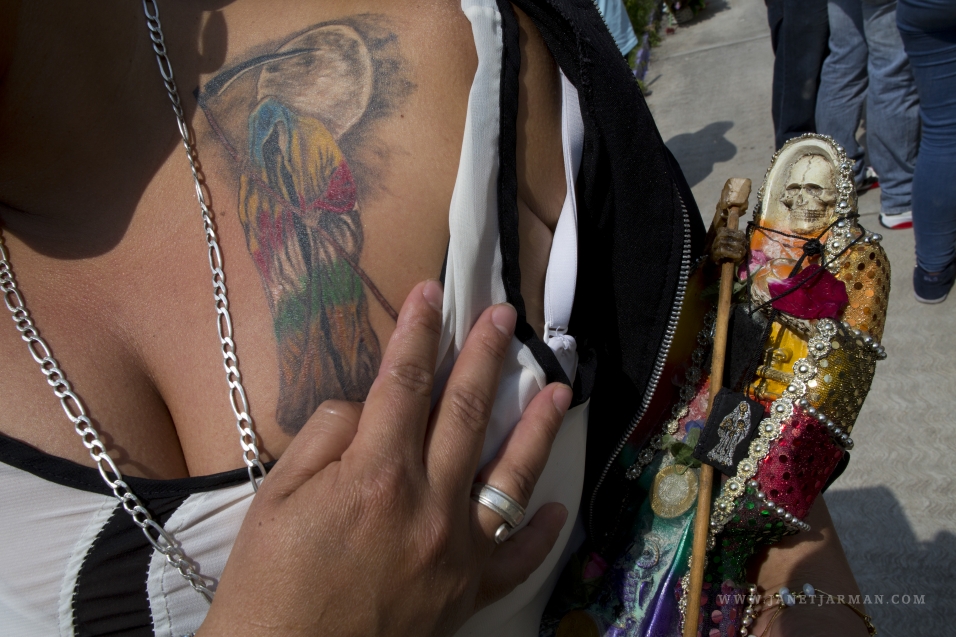
Clutching a replica of the Santa Muerte (Saint Death), Dinora del Carmen Turado Alvarez, 32, proudly displays her tattoo of the popular cult saint Santa Muerte while attending a spiritual service at The International Temple of Santa Muerte, located in the State of Mexico that borders Mexico City. Although the practice of worshipping the Santa Muerte has been denounced by the Catholic Church as blasphemous, the cult has seen a marked increase in followers in Mexico during the last decade, with a now estimated 12 million followers in Mexico, Central America and the southwestern United States, according to religion scholar Andrew Chesnut, who has written a book about Santa Muerte.
-
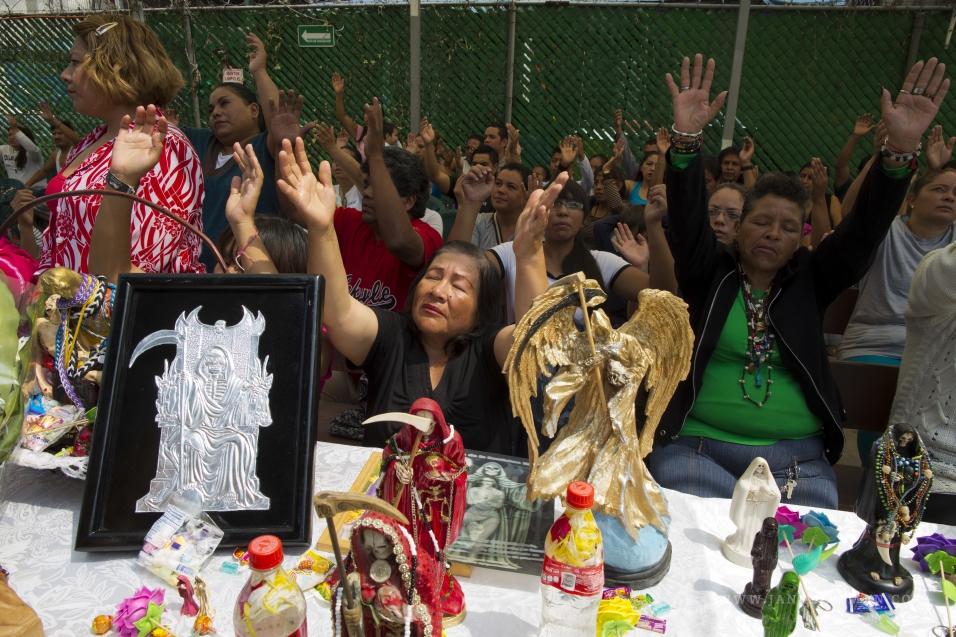
Devotees pray to the Santa Muerte (Saint Death) during a service at The International Temple of Santa Muerte, located in the State of Mexico that borders Mexico City. The temple is open during the week also, offering a place where Santa Muerte followers can pray, receive spiritual cleanings called “limpias,” or purchase an array of religious ephemera, including elaborate replicas of the Santa Muerte of all sizes up to two meters tall. Although the practice of worshipping the Santa Muerte has been denounced by the Catholic Church as blasphemous, the cult has seen a marked increase in followers in Mexico during the last decade, with a now estimated 12 million followers in Mexico, Central America and the southwestern United States, according to religion scholar Andrew Chesnut, who has written a book about Santa Muerte.
-
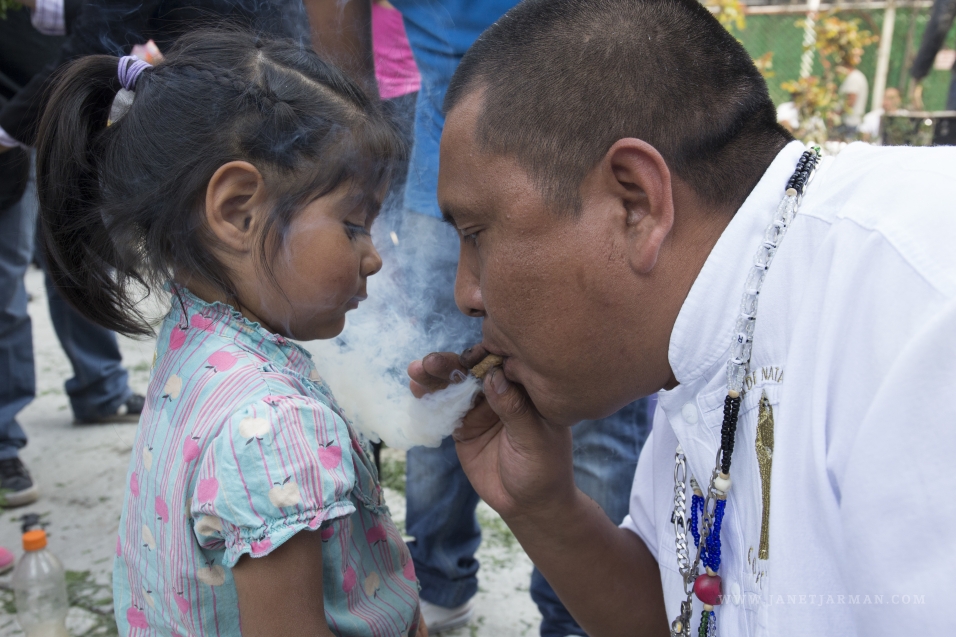
Karla Campos Castillo receives a cleansing, (known in spanish as a limpia), following a Sunday service at The International Temple of Santa Muerte, located in the State of Mexico that borders Mexico City. Cleansing with cigar smoke can ward off bad spirits that might be clinging to a person, said one of the Temple’s volunteers. The venue is open during the week also, providing a place where Santa Muerte followers can pray, receive a cleansing or “limpia,” or purchase an array of religious ephemera, including elaborate replicas of the Santa Muerte of all sizes. Not all Santa Muerte sanctuaries perform these types of rituals; however, such flexibility in the interpretation of ritual is one of the cult’s attractions.
-
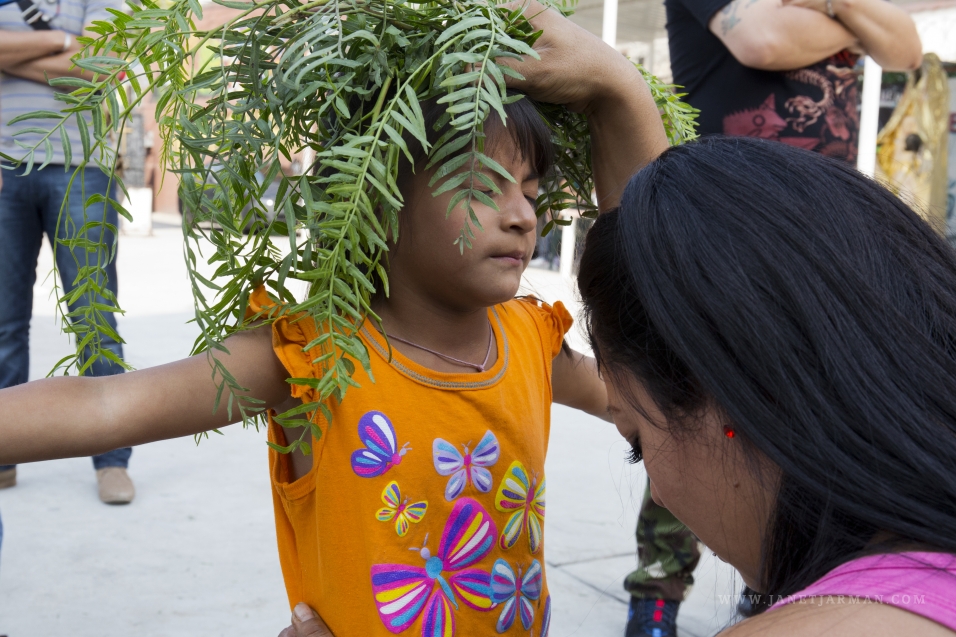
Vainey Pamela Chavez receives a cleansing, (known in spanish as a limpia), following a Sunday spiritual service at The International Temple of Santa Muerte, located in the State of Mexico that borders Mexico City. The venue is open during the week also, providing a place where Santa Muerte followers can pray, receive a cleansing or “limpia,” or purchase an array of religious ephemera, including elaborate replicas of the Santa Muerte of all sizes. Not all Santa Muerte sanctuaries perform these types of rituals; however, such flexibility in the interpretation of ritual is one of the cult’s attractions.
-
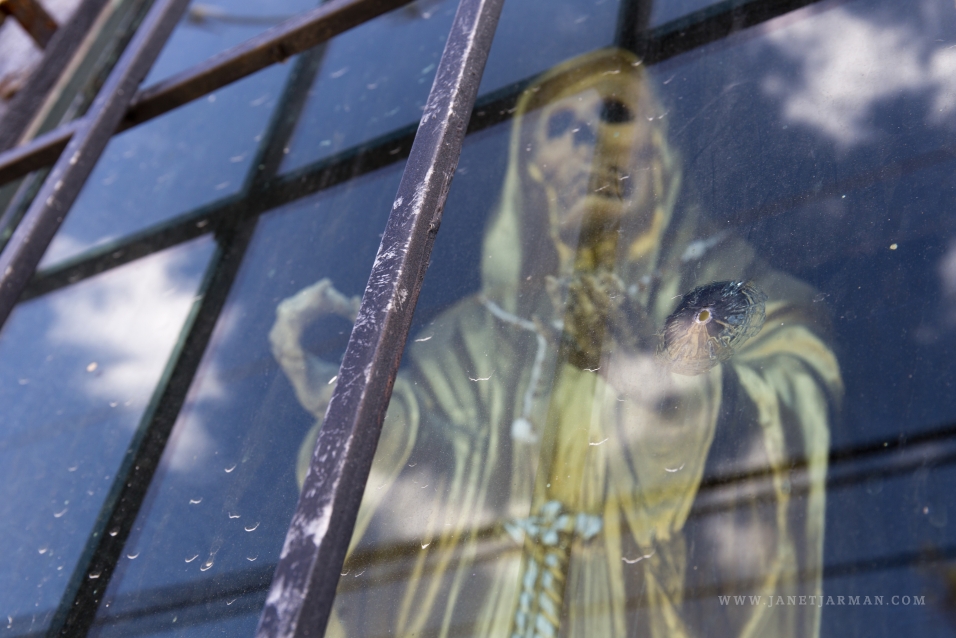
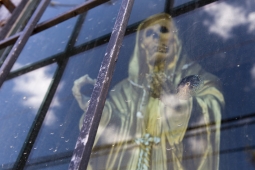
A small window containing a two foot statue of the Santa Muerte (Saint Death) reflects the sky and the large avenue outside the entrance of The International Temple of Santa Muerte, located in the State of Mexico that borders Mexico City. The temple was inaugurated in 2007 by Jonathan Legaria Vargas, who was months later gunned down while driving nearby. His mother, Enriqueta Vargas eventually took over leadership of the temple, hoping to carry on his mission. Although the practice of worshipping the Santa Muerte has been denounced by the Catholic Church as blasphemous, the cult has seen a marked increase in followers in Mexico during the last decade, with a now estimated 12 million followers in Mexico, Central America and the southwestern United States, according to religion scholar Andrew Chesnut, who has written a book about Santa Muerte.
Devoted to La Santa Muerte
Denounced by the Catholic Church, La Santa Muerte (“Saint Death”) has become one of the fastest growing religious movements in The Americas, with an estimated 12 million followers in Mexico, Central America and the southwest of the United States. One of the most famous shrines to the Santa Muerte was started in Mexico City’s Tepito barrio by Enriqueta Romero, known to most as Doña Queta. On the first day of every month, thousands of devotees bring their own adorned statues of the saint and pray to her for healing, work, protection and love. Doña Queta seeks to offer a space where the devotees, many of whom live on the margins of society, feel strengthened by faith and a sense of community.