-
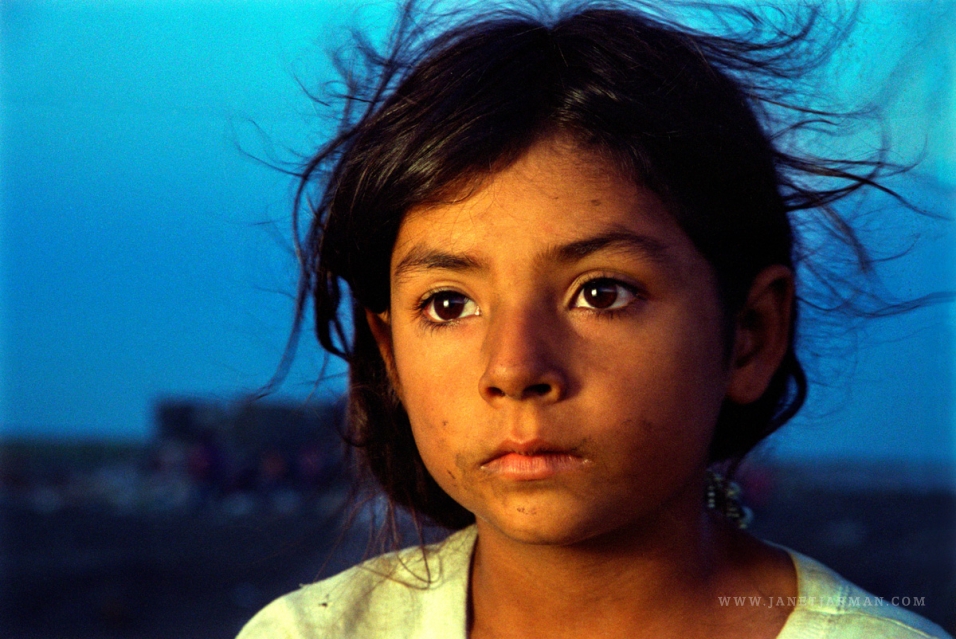
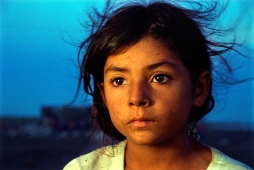
Tamaulipas, Mexico, 1996 – Marisol daydreams at dusk while anticipating the arrival of more garbage trucks at the municipal garbage site where she and siblings search for recyclable items to support their family’s income.
-
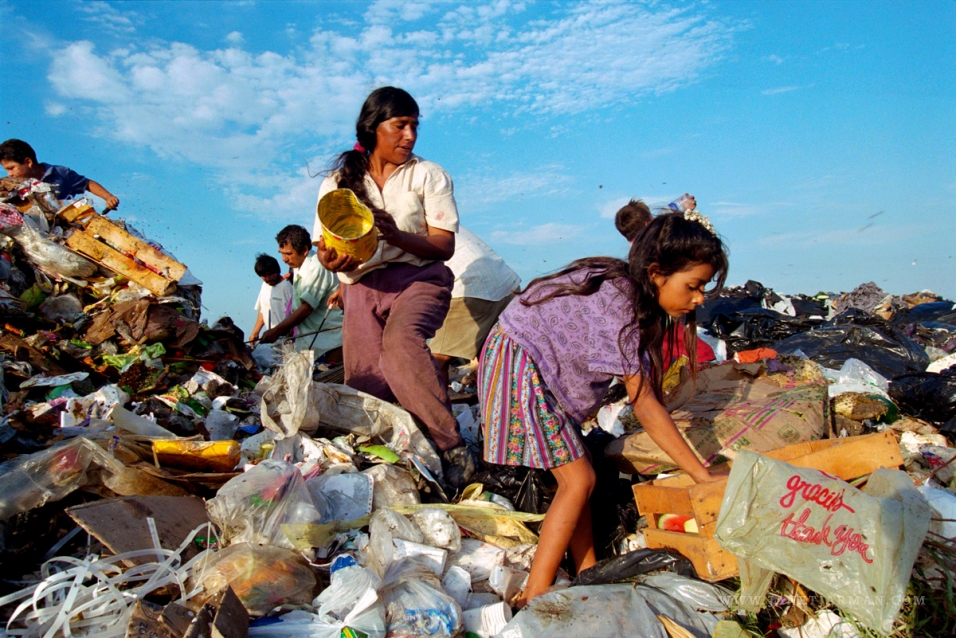
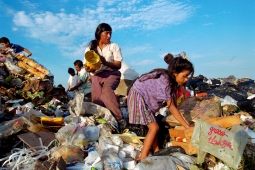
Tamaulipas, Mexico, 1996 – Marisol (R) and her mother, Eloisa, 39, search through mounds of waste at the municipal garbage site. One day, Marisol found a human corpse there. This incident made Eloisa determined to take her children across the border to the United States to join her husband, Vinicio, who gained residency through the 1986 Immigration Reform and Control Act (IRCA).
-
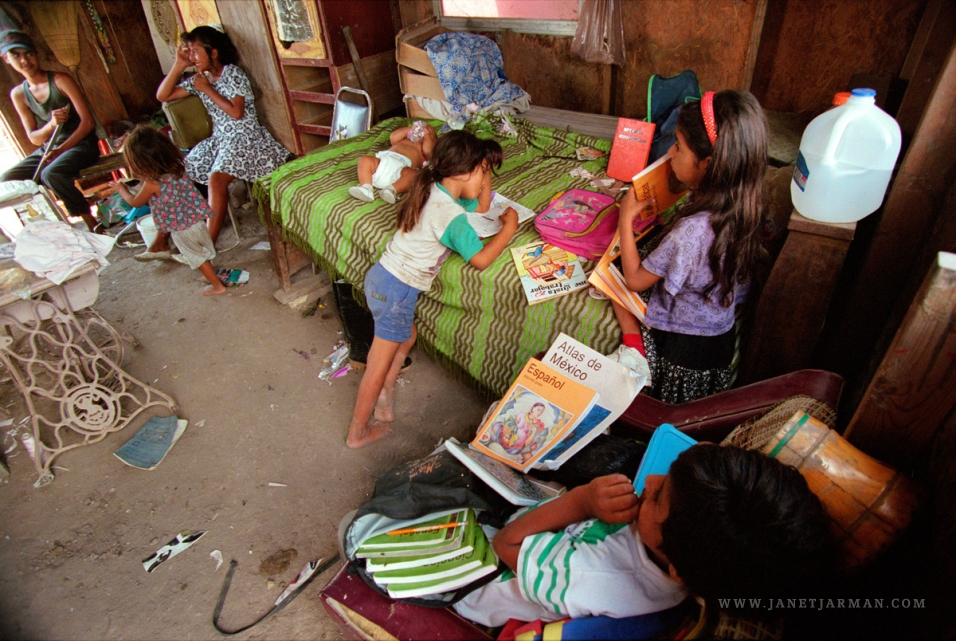
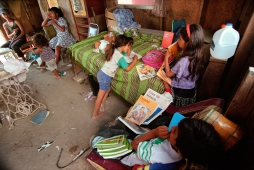
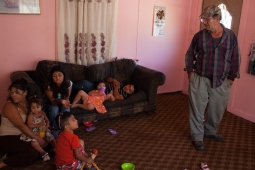
Tamaulipas, Mexico, 1996 – Marisol and her siblings crowd into the main room of their home consisting of three small rooms constructed from particle board and aluminum sheets. From the right: Roibel, 11, Marisol, 8, Cristina, 6, Cynthia, 4 months, Nancy, 12, Eloisa, 3, and a neighbor.
-
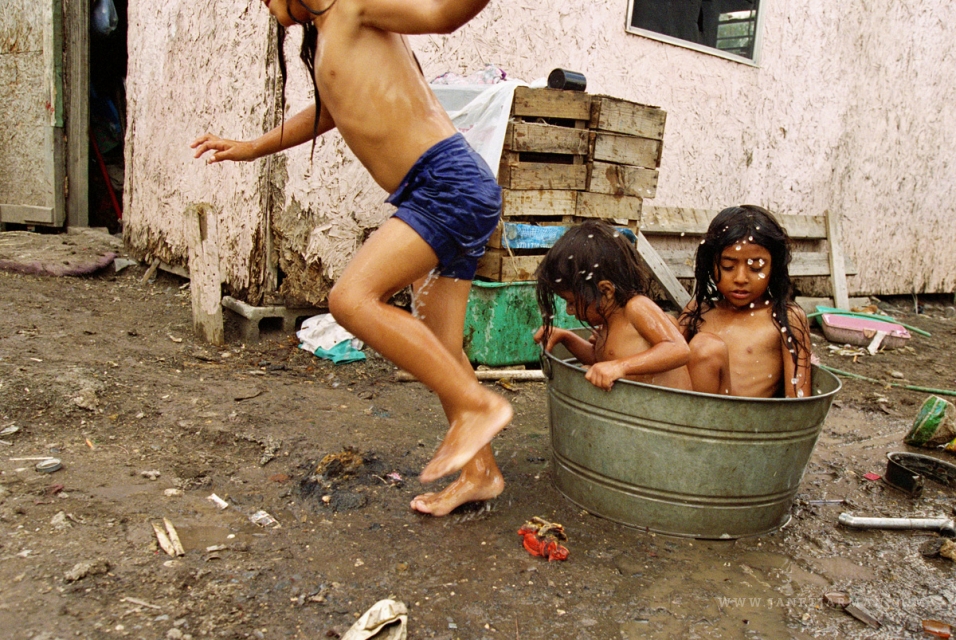
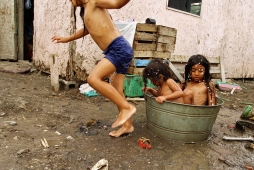
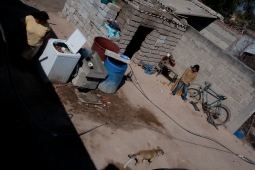
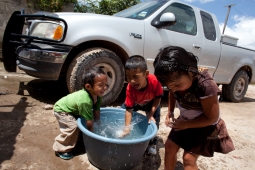
Tamaulipas, Mexico, 1996 – Marisol and her sisters bathe in a metal tub outside their home. With no running water inside their home, the family shared a common water faucet with several neighbors. Their neighborhood lacked electricity and drainage.
-
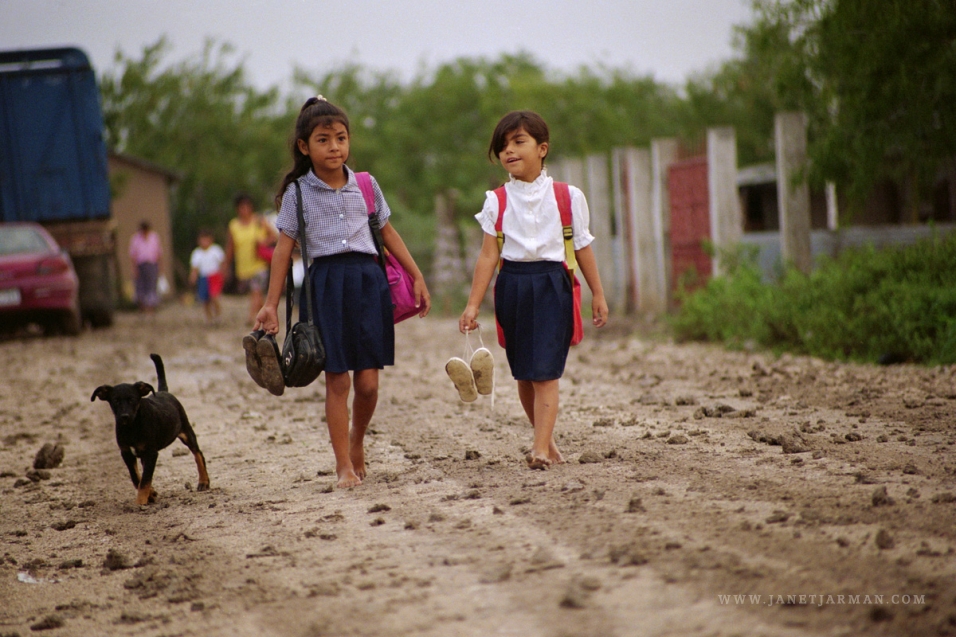
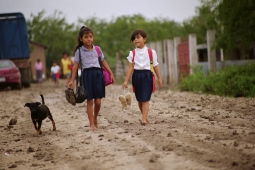
Tamaulipas, Mexico, 1996- Marisol and her sister Cristina protect their shoes while walking through mud to their local school. The dirt road was paved with 'caliche,' a by-product from a local chemical plant. Plant owners donated the waste product to the local government who sold it to 'colonias' by the ton in order to cover dirt roads.
-
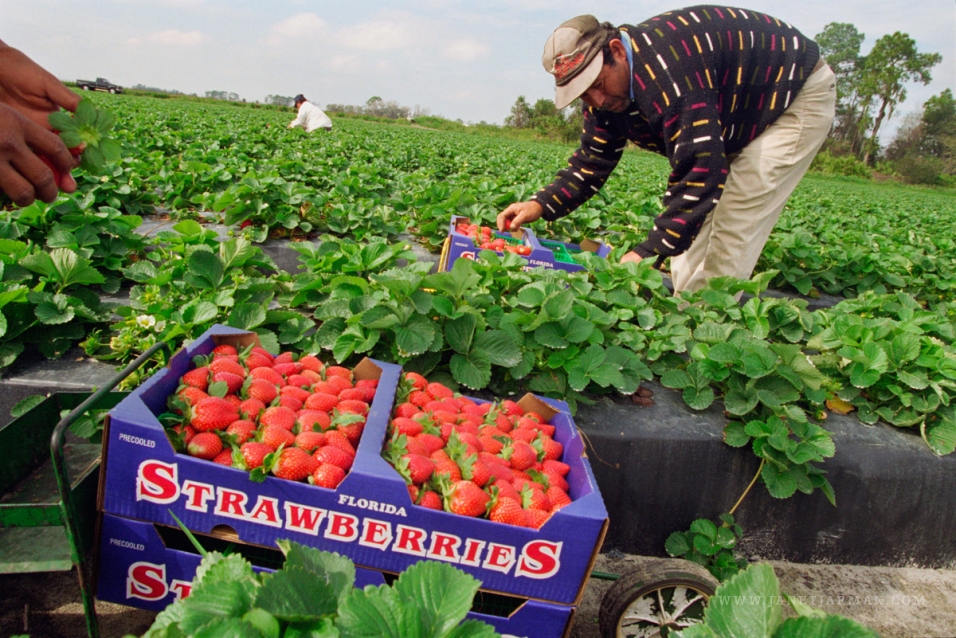
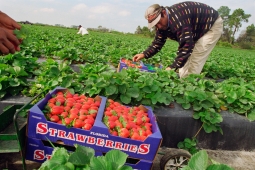
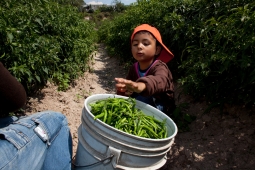
Florida, U.S.A. 1996 – Marisol’s father, Vinicio, harvests strawberries on a large-scale farm, just after bringing his wife and nine children from Mexico to the United States. He earned legal status to work in the U.S. through the 1986 Immigration Reform and Control Act (IRCA) and decided to bring his whole family across the border ten years later.
-
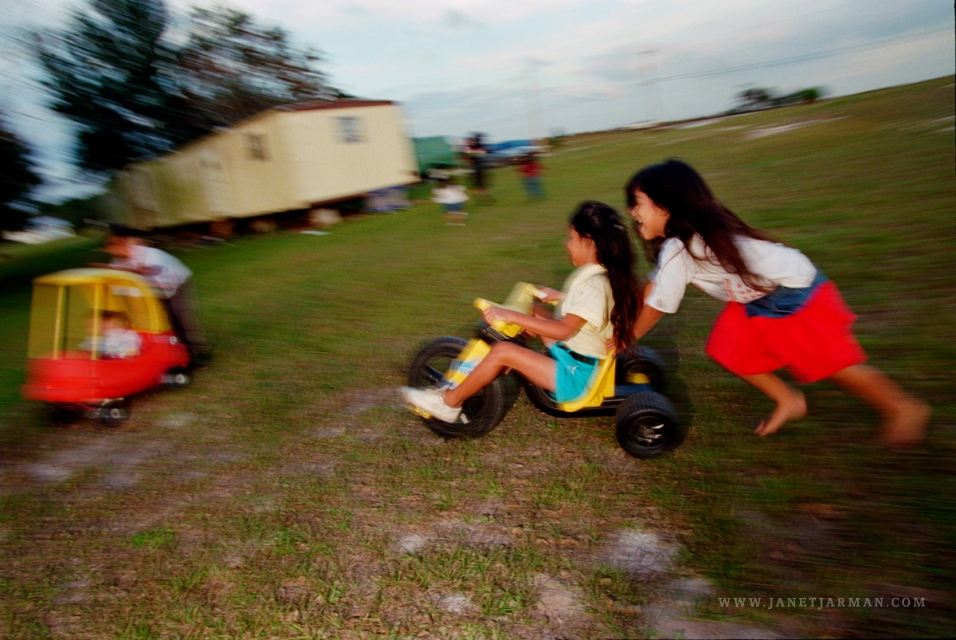
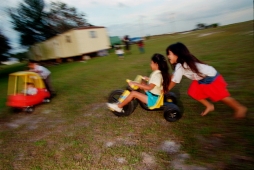
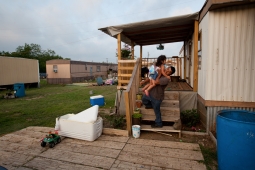
Florida, U.S.A. 1996 - Marisol and her sister race through the yard surrounding their new trailer home where they have much more space than they did in Mexico. However, they complained that the small three-room trailer was too cramped for a family of twelve. At night, they heard rats running between the walls. Eloisa and her children felt isolated and homesick for Mexico.
-
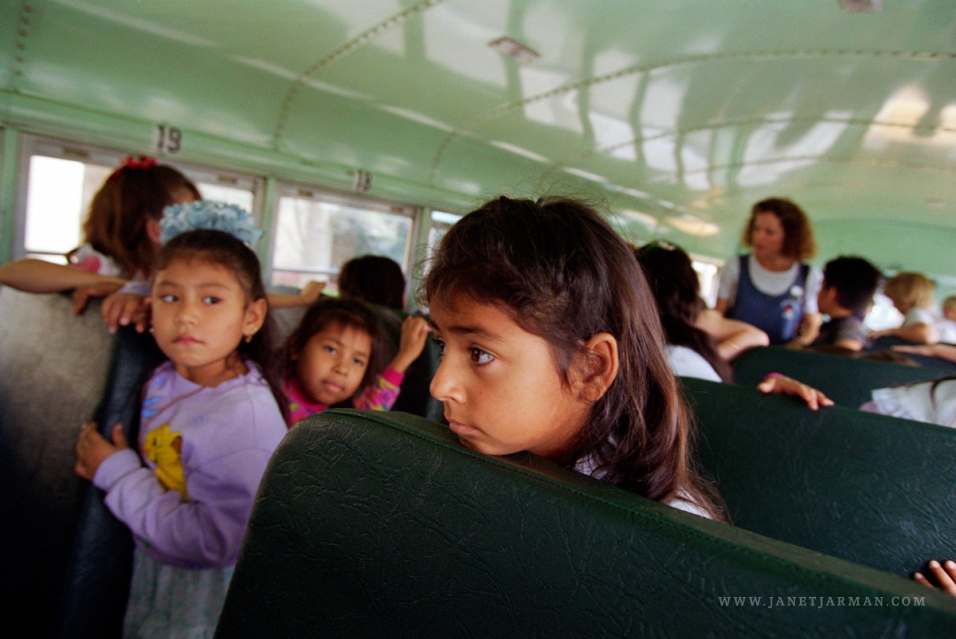
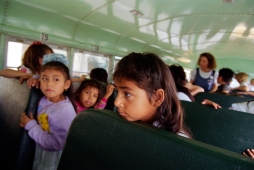
Balm, Florida, U.S.A. - 1996 - Immigrant children observe their new classmate as Marisol takes the bus on her first day of school in the United States. Upon arriving in the U.S., she and her younger siblings had the opportunity to attend school where they began to learn English. Their older siblings had to accompany their parents in the fields.
-
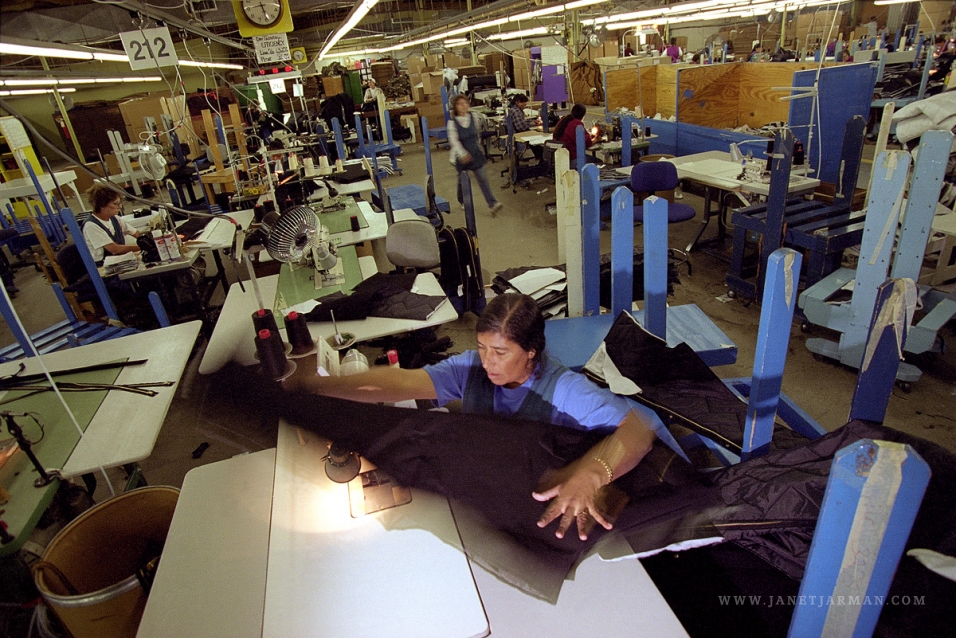
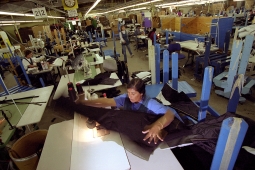
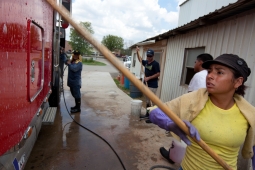
Texas, U.S.A. 2000 – Eloisa works at a Factory Outlet where she and dozens of other immigrants manufacture sport and hunting apparel. She took the job since her sister also worked there. It was short-lived. After being laid off, she found another job washing dishes at a local restaurant. Afterwards, she worked at a home superstore, where she suffered an accident that left her nearly debilitated when a forklift banged her head.
-
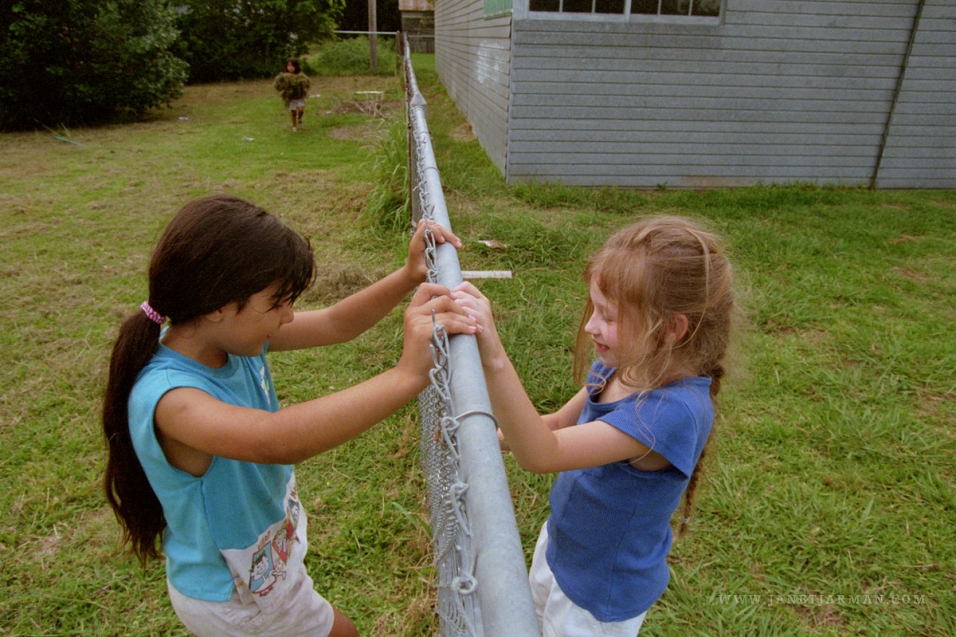
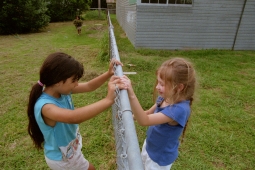
Texas, U.S.A., 2000 – Through the fence that divides their families, Cristina (L) and Mary, both 8, become friends even though Mary’s parents prohibited her from entering the yard of her Mexican neighbors. Immigrants must first cross a geographical border. Afterwards, they often confront many other challenging social barriers.
-
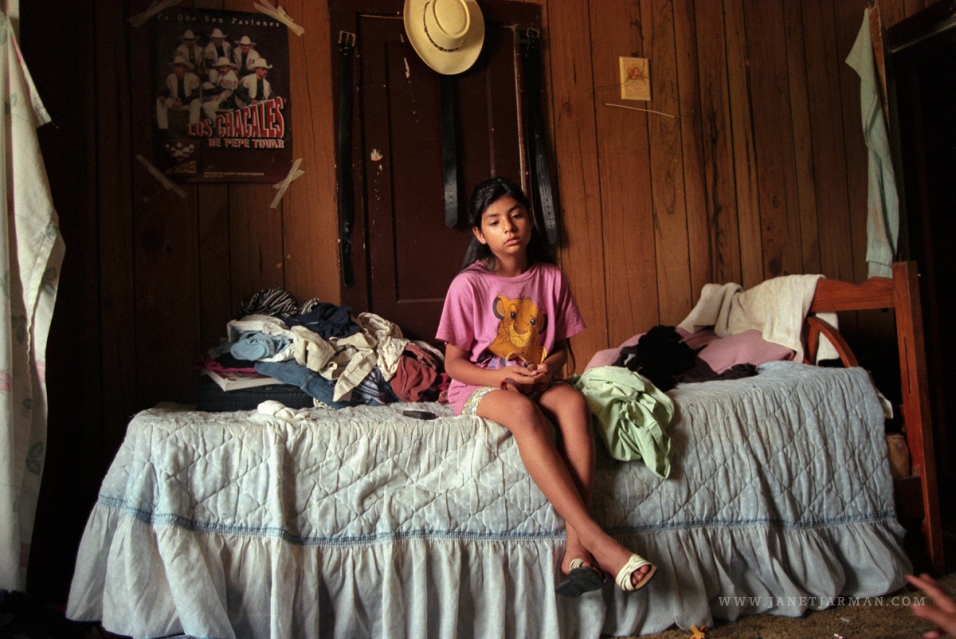
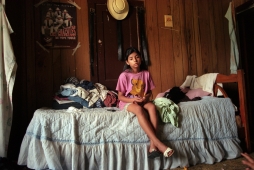
Florida, U.S.A. 2000 – Marisol sits alone in her room, listening to the chaos of screaming parents and family members. After her family moved to Florida in late 1996, they soon relocated to Texas. Tension mounted between her parents and ended in a bitter divorce.
-
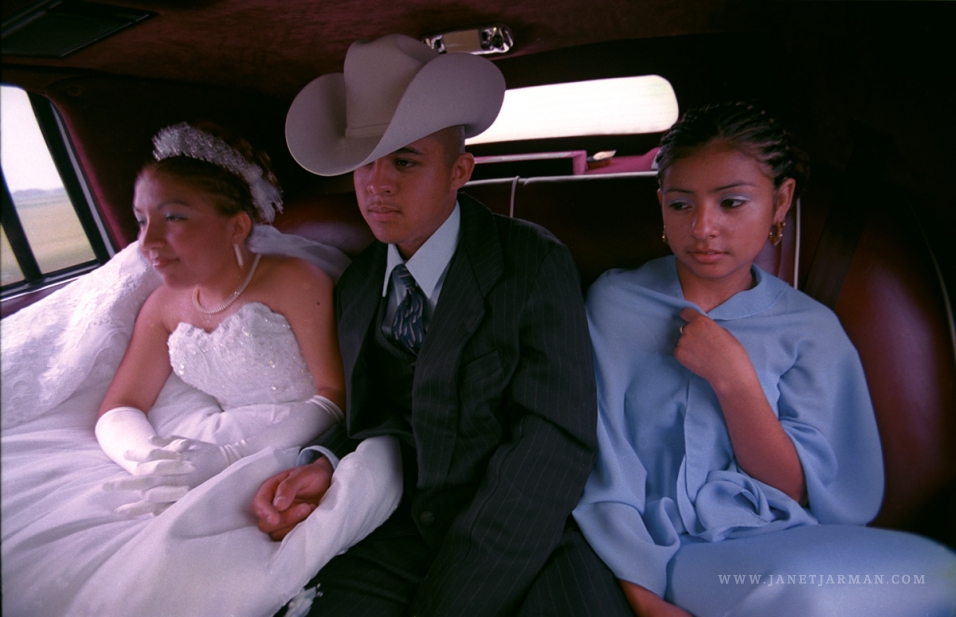
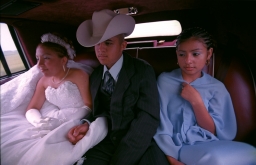
Texas, U.S.A. 2003- Marisol (R) accompanies her best friend, Mayra, in the celebration of her Quinceañera, a Hispanic tradition marking the rite of passage into womanhood at age 15. Marisol and her sisters dreamed of having their own Quinceañeras; however, their parents never could afford the elaborate party. For these events, families often spend as much or more than one might on a wedding ceremony.
-
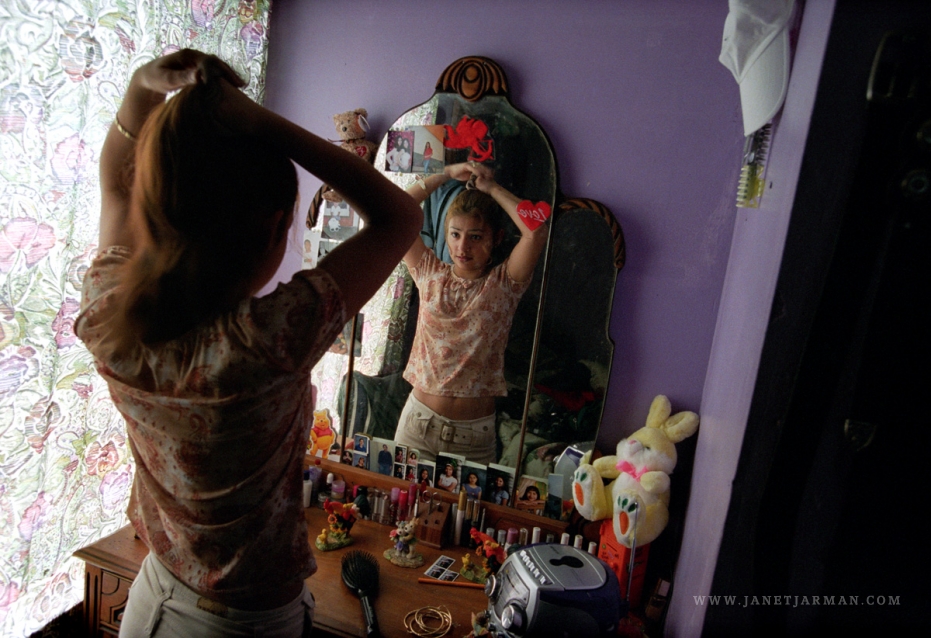
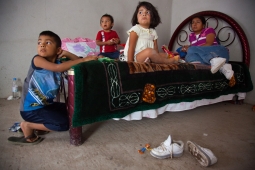
Texas, U.S.A. 2004 - Inside the room she shares with three sisters, Marisol prepares to visit with friends, including a boy she liked at the time. Her mother tried hard to monitor her six daughters and their social lives, encouraging them to stay in school and forego relationships. Her efforts proved futile.
-
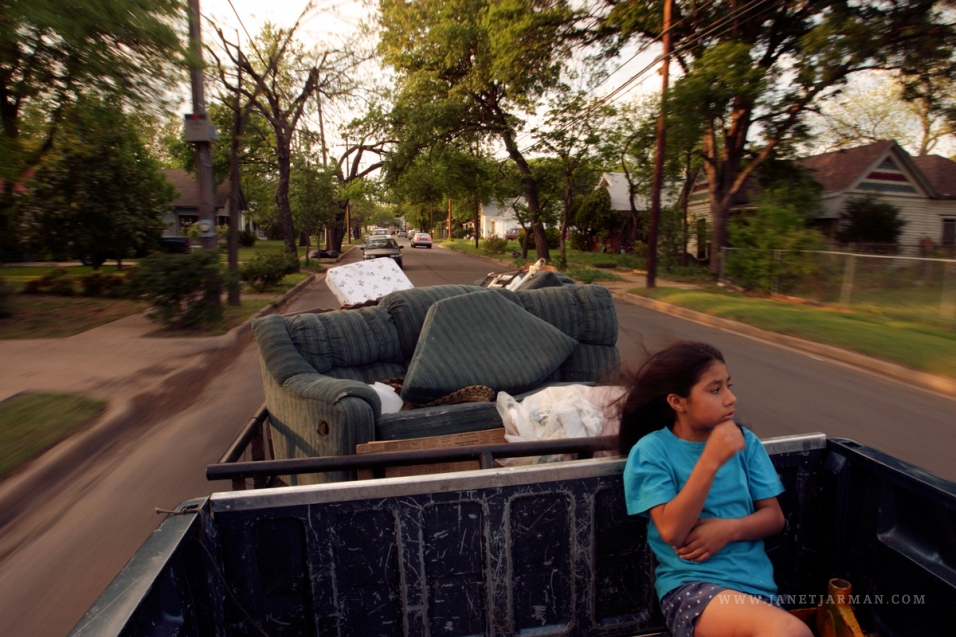
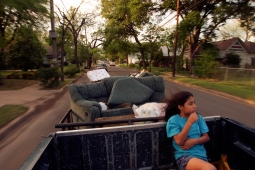
Texas, U.S.A. 2003 – Marisol’s younger sister says good-bye to their home, from which they were evicted. Her brother, Juan (driving), helps his sisters by transporting their only belongings. For several years after their parents’ bitter divorce, the home provided the sisters’ only stability. Their life turned chaotic again after the eviction.
-
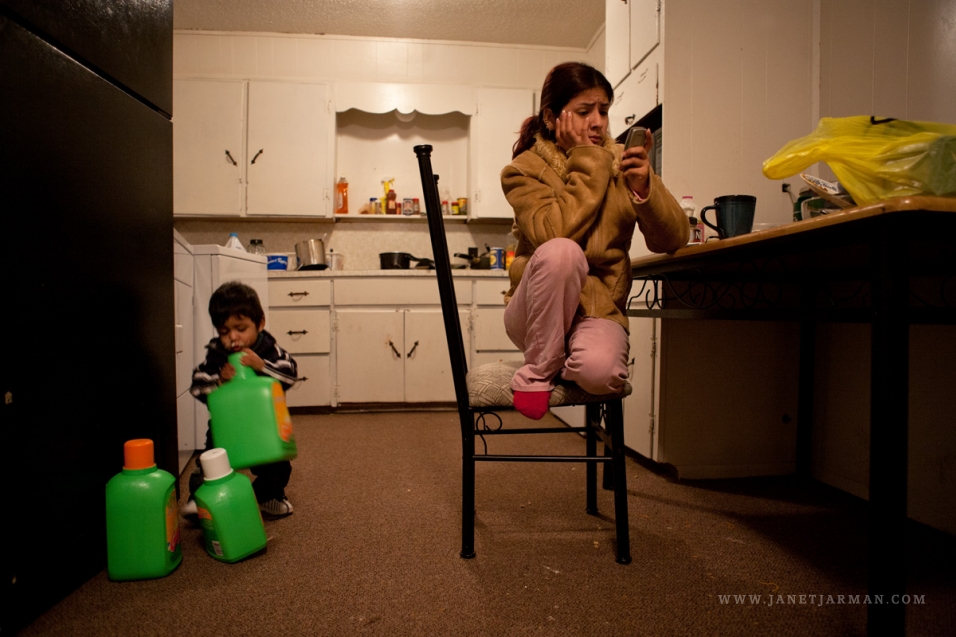
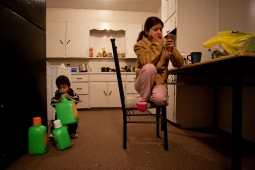
Texas, U.S.A. 2007 - Marisol studies her text messages while her first son, Carlos, 2, plays with empty detergent bottles inside the kitchen where she and Andrés moved after Carlos’ birth. Soon after breaking up with her first boyfriend, Marisol met Andrés. To her surprise, she became pregnant with Carlos at age 16. He was born two months early and suffered numerous health problems as an infant. The pressure of these problems forced Marisol to give up on her dream of finishing high school.
-
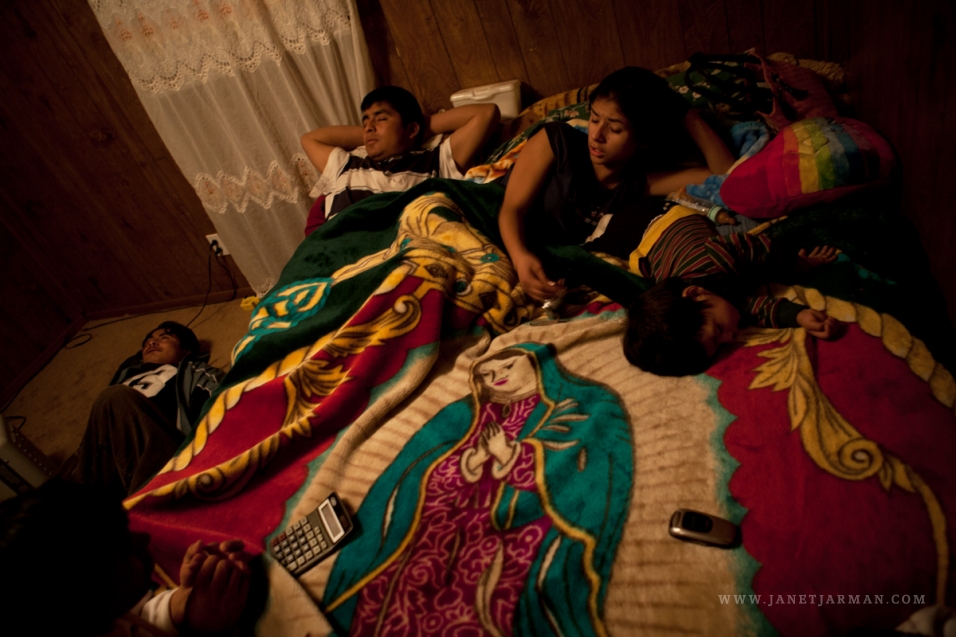
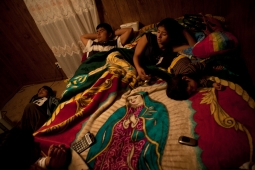
Texas, U.S.A. 2007 - Marisol, Andrés, and their first son, Carlos stay warm under a blanket adorned by the Virgin de Guadalupe.The night was especially tense, since Andrés had just returned from a 30-hour road trip to New Mexico. During the dangerous trip through icy mountain road conditions, he witnessed the horrific death of two of his friends, whose car slid into a truck on a high mountain pass. Hundreds of immigrants die crossing the Mexican-U.S. border each year. Many more are killed on U.S. roads and in work related accidents.
-
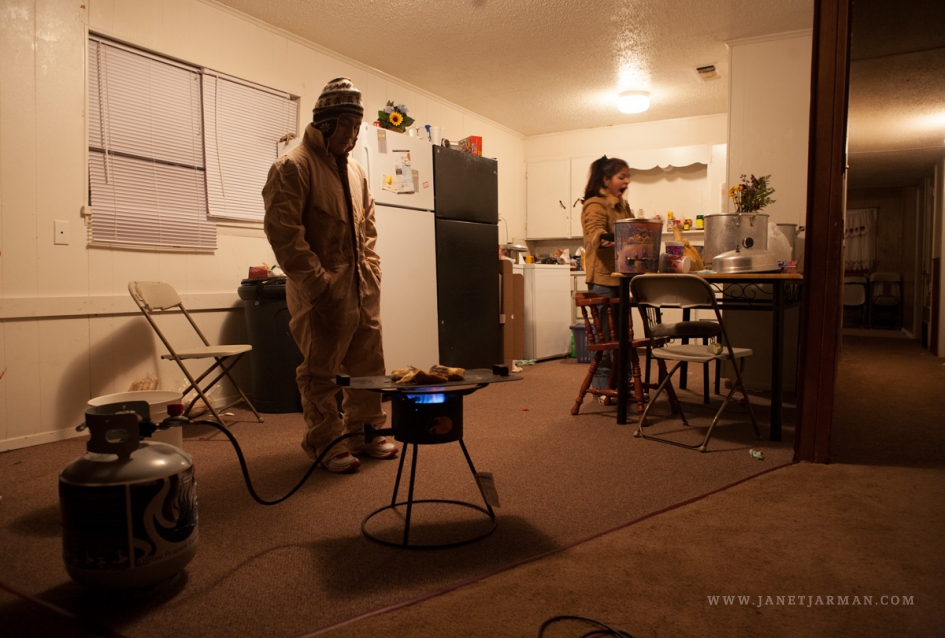
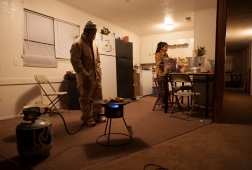
Texas, U.S.A. 2007 - Marisol warms tamales for Andrés at 5 a.m. as he prepares to leave for work, washing cars. Andrés has always held a job. He particularly enjoys working with cars and trucks. He used to dream of opening a car wash in his hometown in Mexico. He is tired of living under the shadows as an immigrant and longs for the freedom he felt as a child growing up in Mexico.
-
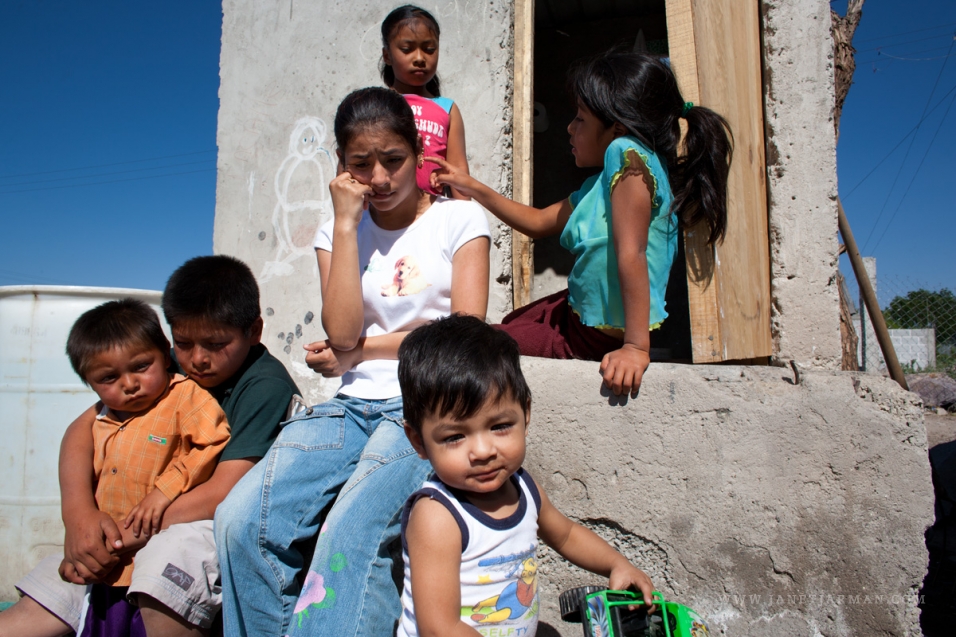
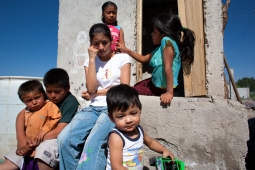
Hidalgo, Mexico, 2007 - Village children study Marisol as if she were an extraterrestrial, after she arrived in Andrés’ hometown, a small rural community in Mexico. In 2007, Andrés’ parents were eager to see their first grandson. Unable to return due to his status in the U.S., Andrés sent Marisol, now a U.S. resident, and Carlos, a U.S. citizen, to meet them. Each year Andrés sends thousands of dollars to his parents to help them construct a new house. His dream is to live in this house with Marisol and their children one day.
-
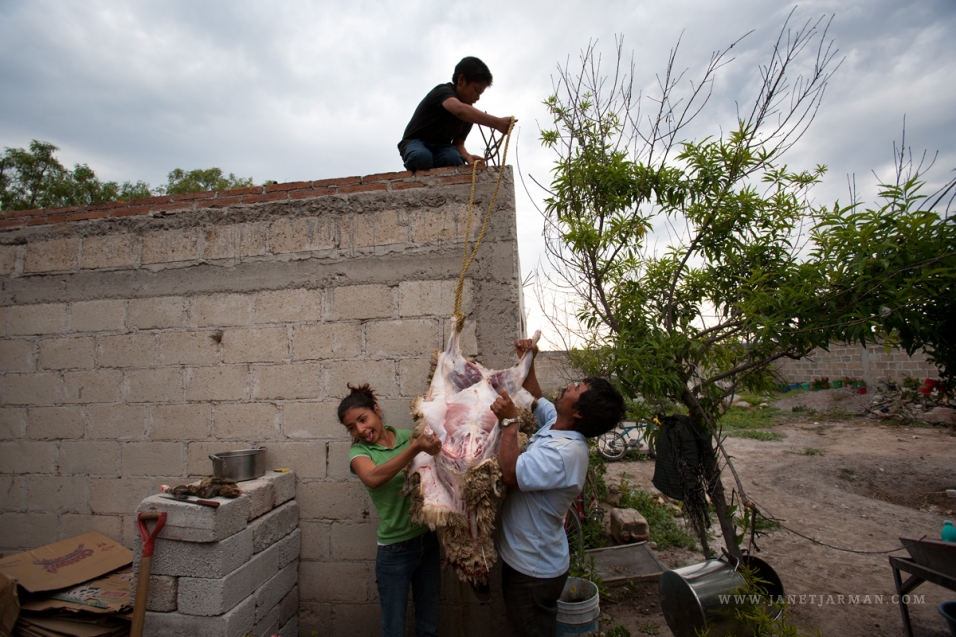
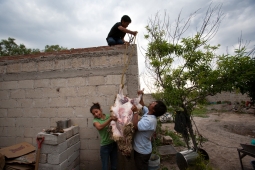
Hidalgo, Mexico, 2007 - Marisol helps her father in-law prepare a slaughtered sheep for a village party he made in honor of her visit. Most residents here raise sheep and goats and grow corn, alfalfa, chili and tomatoes. Marisol admitted that she could never endure the type of hard physical labor performed by women in Andrés’ village.
-
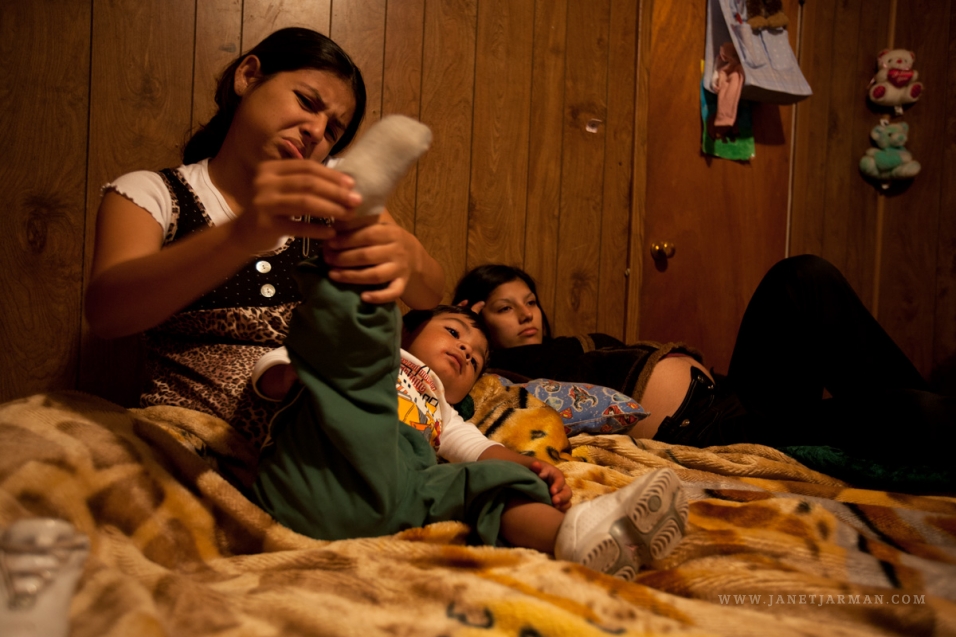
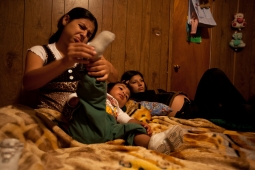
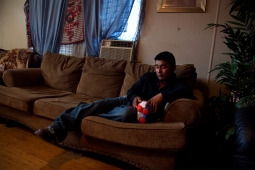
Texas, U.S.A. 2007 – Pregnant with her second child, Marisol, 19, changes Carlos’ socks while watching television with her sister, Cristina, 17, also pregnant.
-
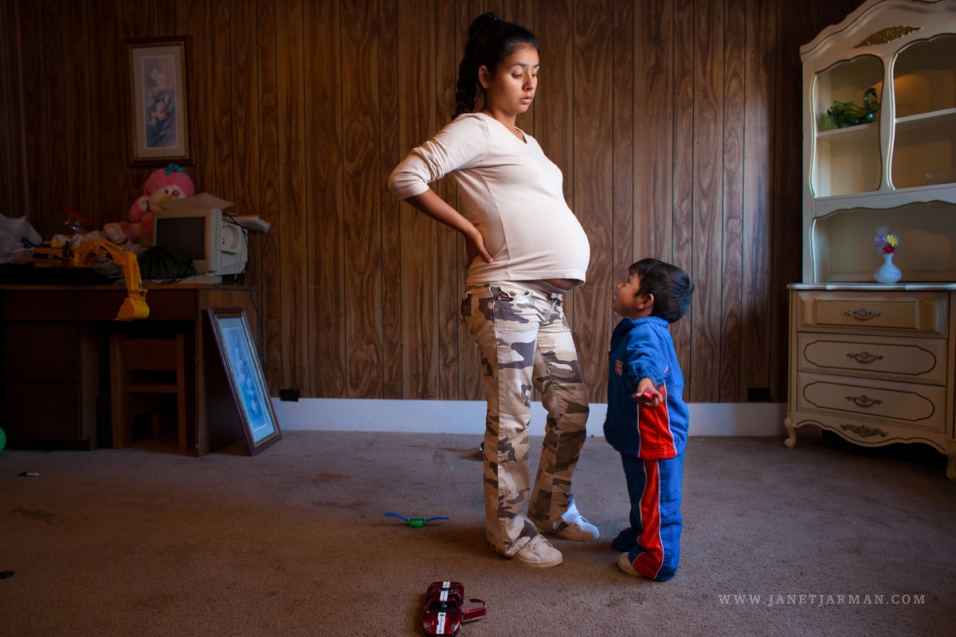
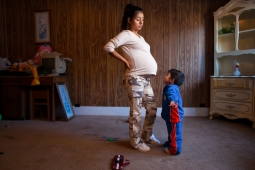
Texas, U.S.A. 2007 – Marisol and Carlos interact inside their living room, days before she gave birth to her second child, a daughter named Anahi. Marisol had only wanted one child, since she had plans to finish high school and become a lawyer, a computer teacher or an artist.
-
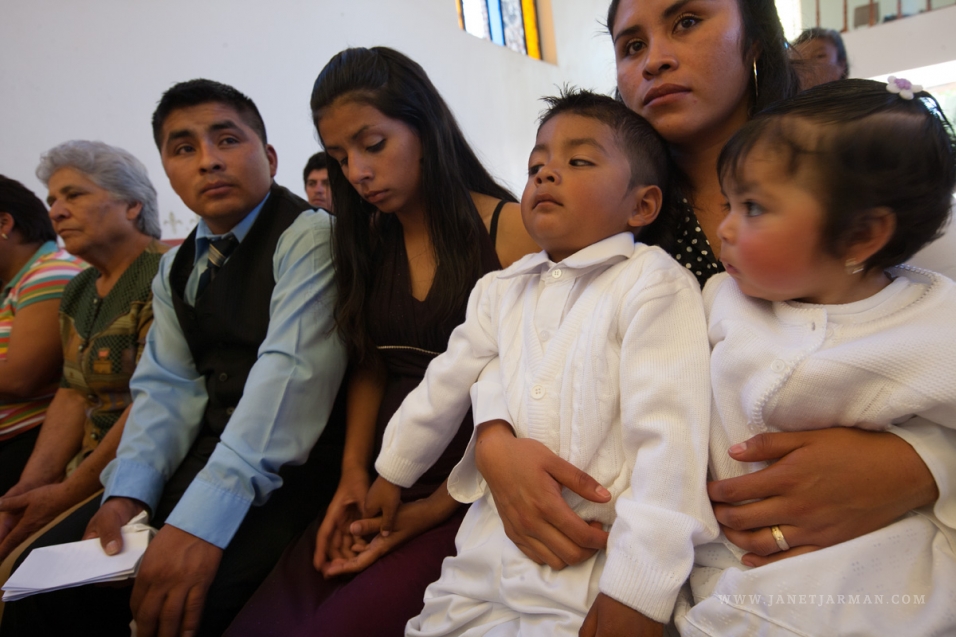
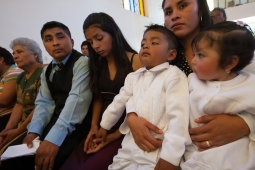
Hidalgo, Mexico, 2008 - Marisol and Andrés participate in a two-hour baptism service for multiple families in Andrés hometown in Mexico. Returning to Mexico to baptize his children was a priority for Andrés. Following the ceremony, he threw a huge party for his family and over 200 people from his village. The event gave him great pride.
-
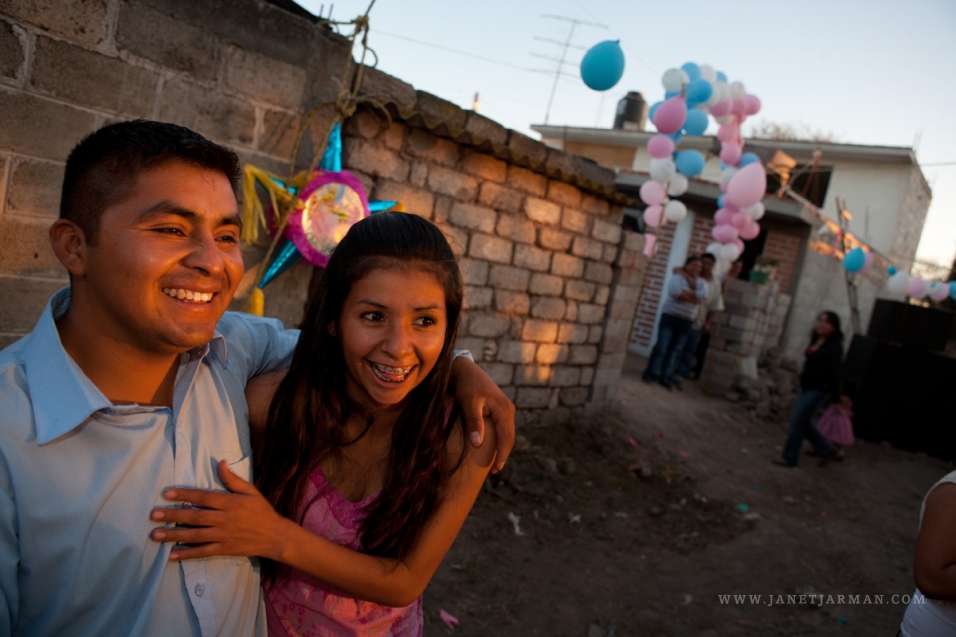
Hidalgo, Mexico, 2008 - Marisol and Andrés enjoy the baptism event they threw for over 200 villagers in Andrés’ hometown. Even though they had no savings, they scraped together around $700 for the party, since it was important to him to show his success to his community.
-
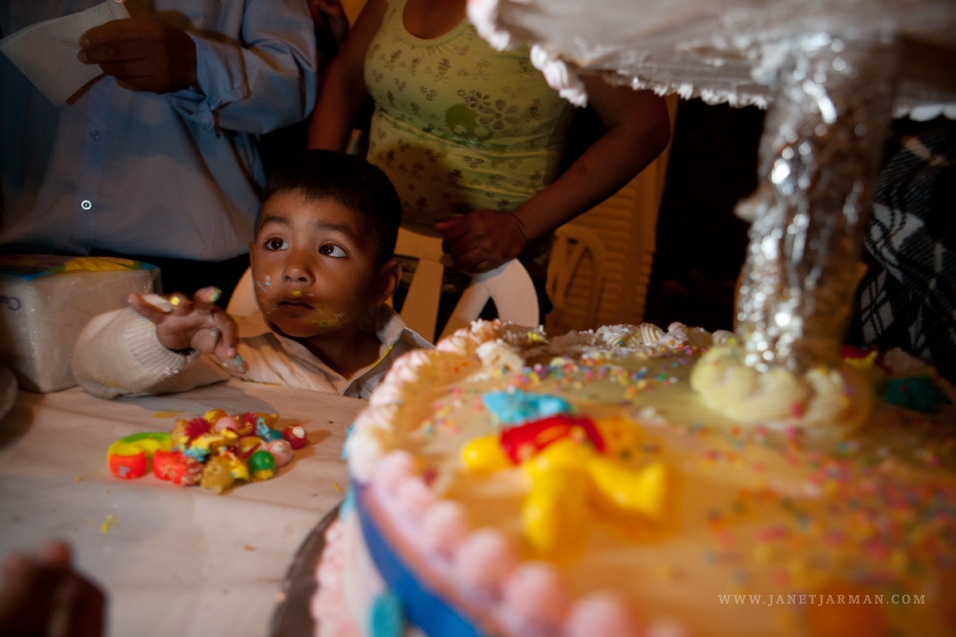
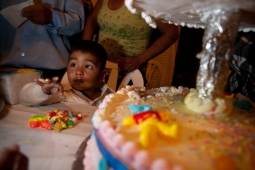
Hidalgo, Mexico, 2008 – Carlos enjoys a cake served at a party following the baptism of him and his sister. Andrés and Marisol invited over 200 people to the event. Even though they had no savings, they scraped together around $700 for the party, since Andrés wanted to give back to his community in Mexico, where baptisms are almost as important as weddings.
-
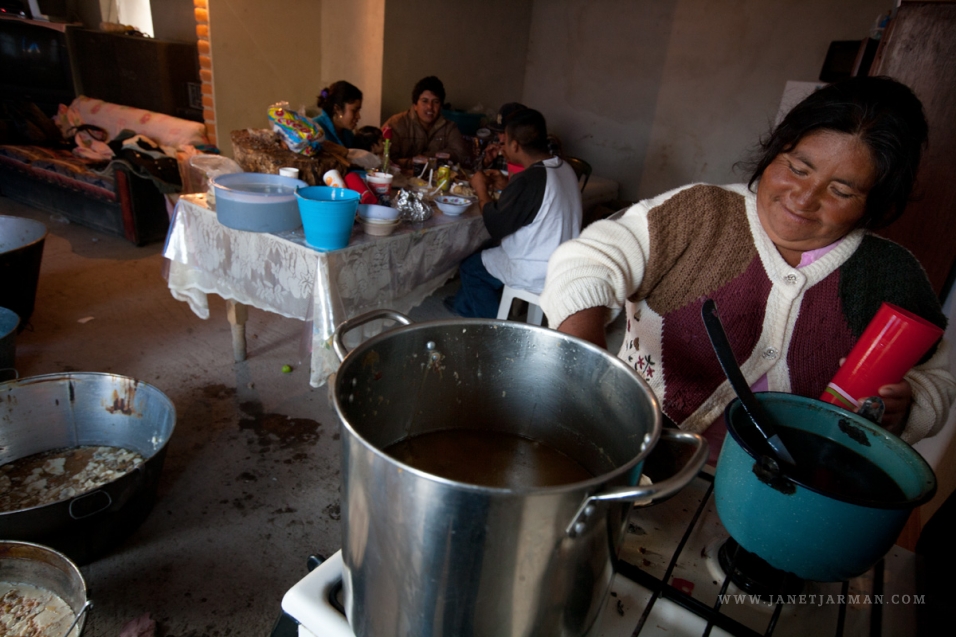
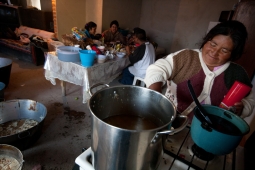
Hidalgo, Mexico, 2008 – Marisol’s mother in-law cooks breakfast in her home, beaming with happiness over the possibility that Marisol and her son Andrés might return from the U.S. to permanently live with her in Mexico in this house. With savings from his U.S. jobs, Andrés build this kitchen onto his mother’s home, along with three new rooms downstairs and a second level as well.
-

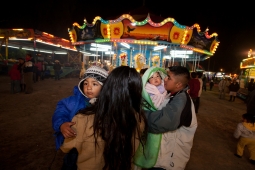
Hidalgo, Mexico, 2008 – Andrés and Marisol stroll around a village fair. December is an important month for parties and reunions across Mexico. Like Andrés, many immigrants return for the month to enjoy their families and the traditions they miss. The financial sacrifice is high, since they must pay up to $4,000 (USD) to a middleman (coyote) to usher them back into the U.S. illegally.
-
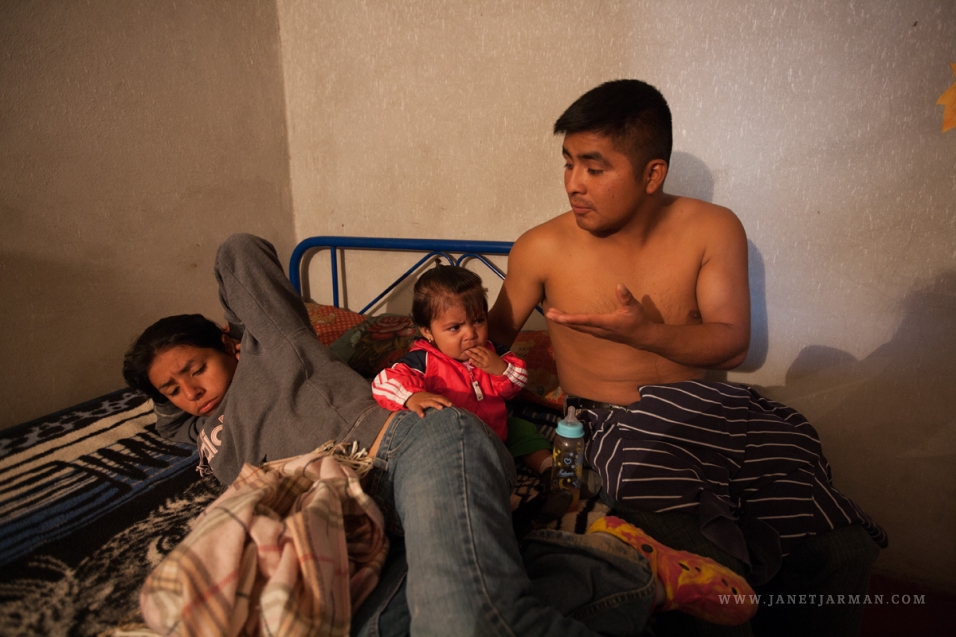
Hidalgo, Mexico, 2008 - Disgusted by Andrés’ behavior in Mexico, Marisol threatens to break up with him. He reacts by begging her to stay in Mexico with him instead of returning to the U.S. Eventually, a month later, they returned to the U.S., since they needed more money. Marisol also preferred U.S. healthcare and the U.S. school system for her children, both U.S. citizens. She also discovered that she was pregnant with their third child.
-
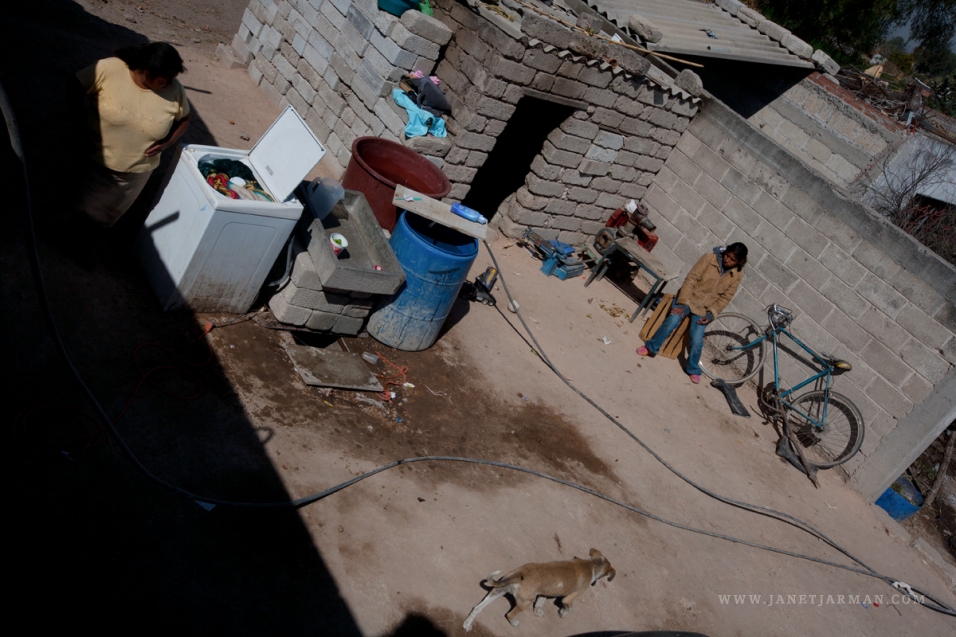
Hidalgo, Mexico, 2008 - While her mother in-law uses a new washing machine purchased by her immigrant son, Marisol sits alone in the family’s central work area, pondering her fate should she move back to Mexico. On some days, she fancies the idea, but her thoughts always bring her back to the U.S., where she believes she and her children have more opportunities and better access to quality healthcare and education.
-
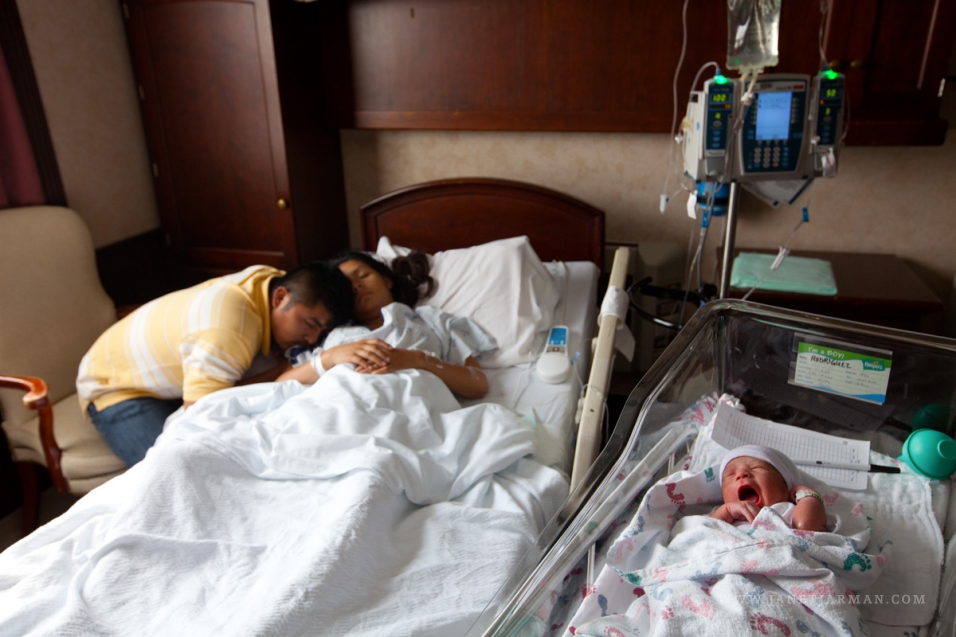
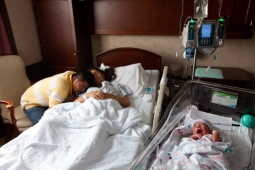
Texas, U.S.A. 2009 – Andrés comforts Marisol, hours after she gave birth to their third and final child, a boy they named Luis.
-
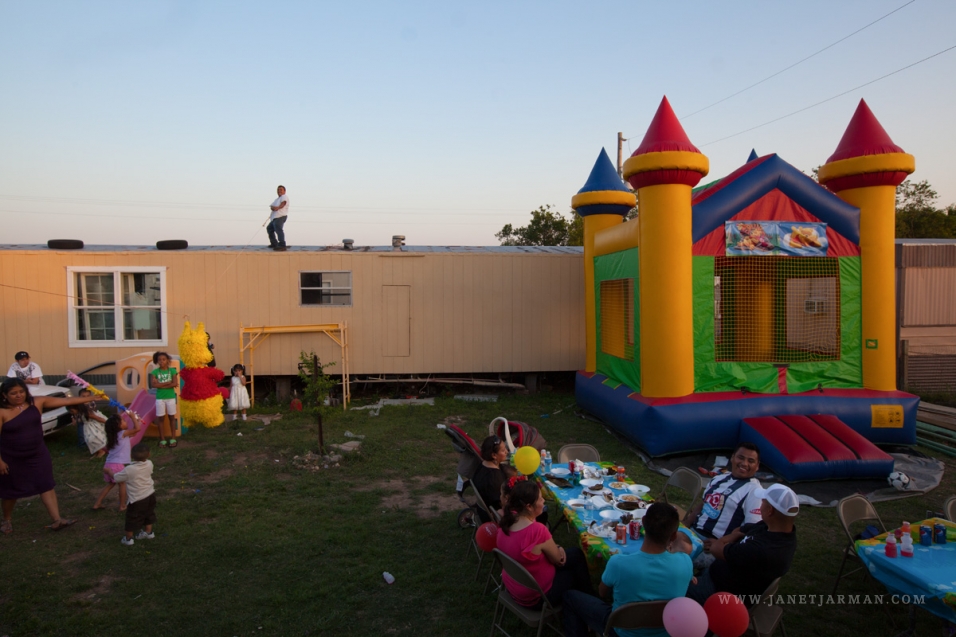
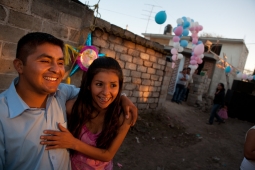
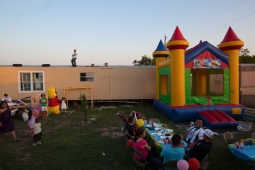
Texas, U.S.A. 2011 – Standing on top of their neighbor’s home, Andrés lifts a piñata full of candy, a tradition at Mexican birthday parties. Mexican parents typically put a lot of emphasis on children’s birthday parties. This year, Marisol was excited that they could afford a jumping castle and a live singer.
-
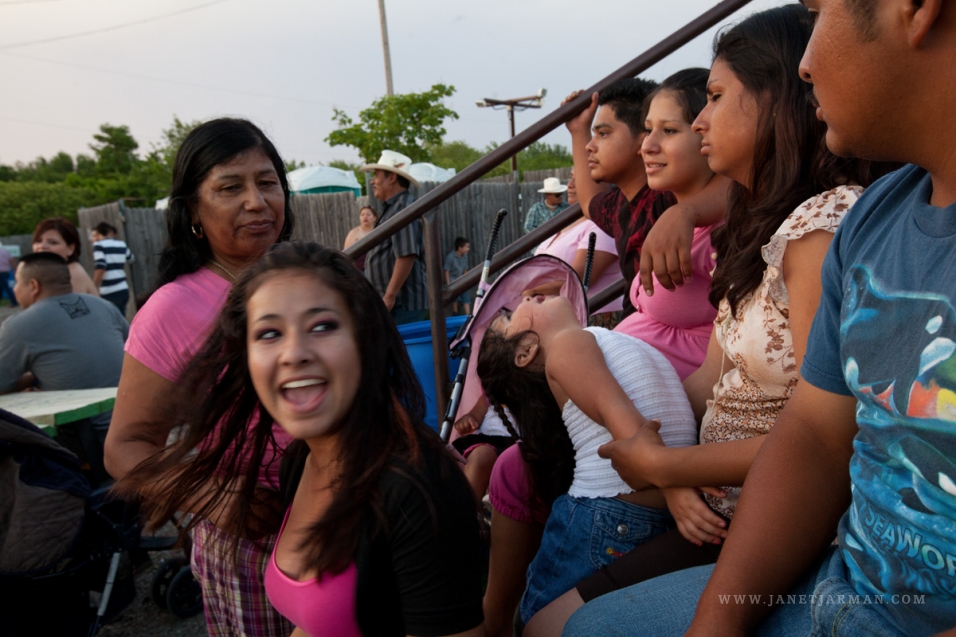
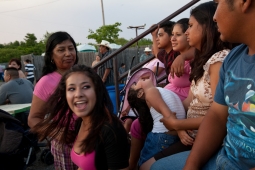
Texas, U.S.A. 2011 - Marisol (in flowered shirt) enjoys a family outing with her mother, Andrés and all of her sisters and their families. Together, they attended a public dance featuring Mexican bands. Due to financial restraints, Marisol and Andrés rarely go out. Their favorite activity is to rent movies and watch them at home.
-
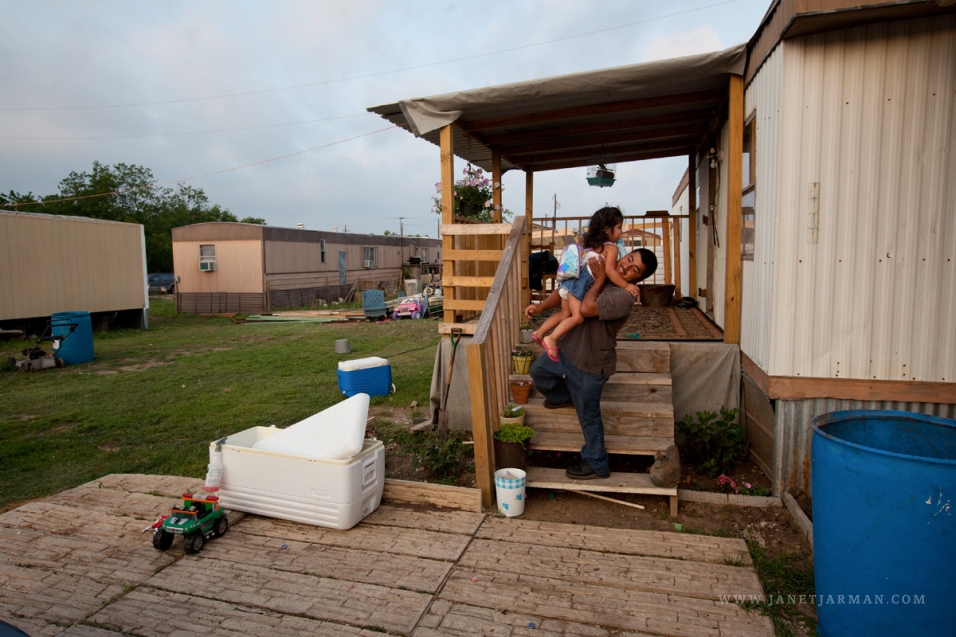
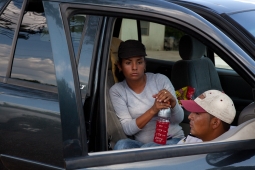
Texas, U.S.A. - Andrés carries his daughter, Anahi, to his car. As their family grew in number, Marisol needed to start working in order to help them make ends meet, necessitating the need to drop off her children every day at her sister’s house, where they could be watched while she and Andrés worked at a truck wash.
-
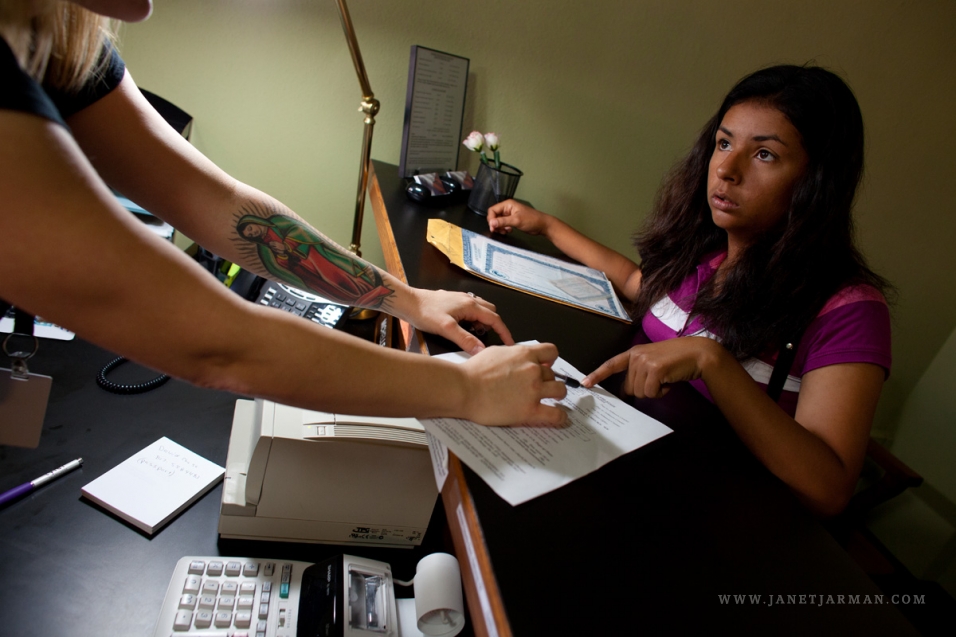
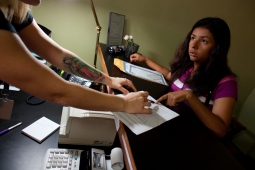
Texas, U.S.A. 2011 - A county clerk assists Marisol as she applies for U.S. passports for her three children, all U.S. citizens by birth. Over the years, Marisol has achieved legal residency in the U.S., allowing her the flexibility to travel back and forth between Mexico and the U.S.
-
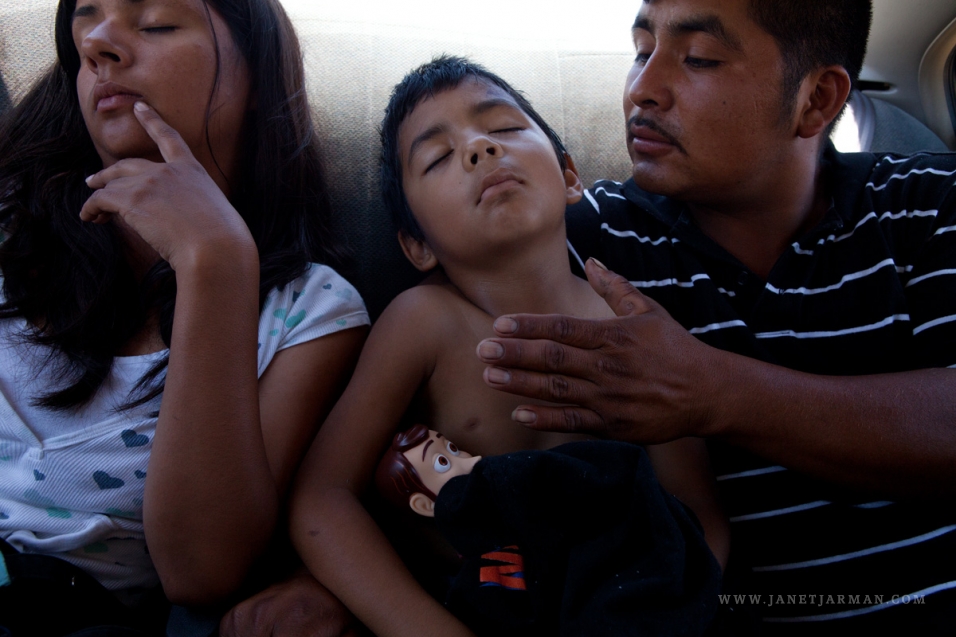
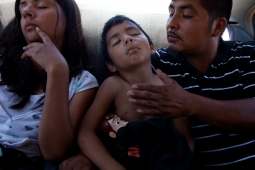
Texas, U.S.A. 2011 – Marisol (L), Carlos (M) and Andrés (R), return home, exhausted, hours following Carlos’ eye operation.
-
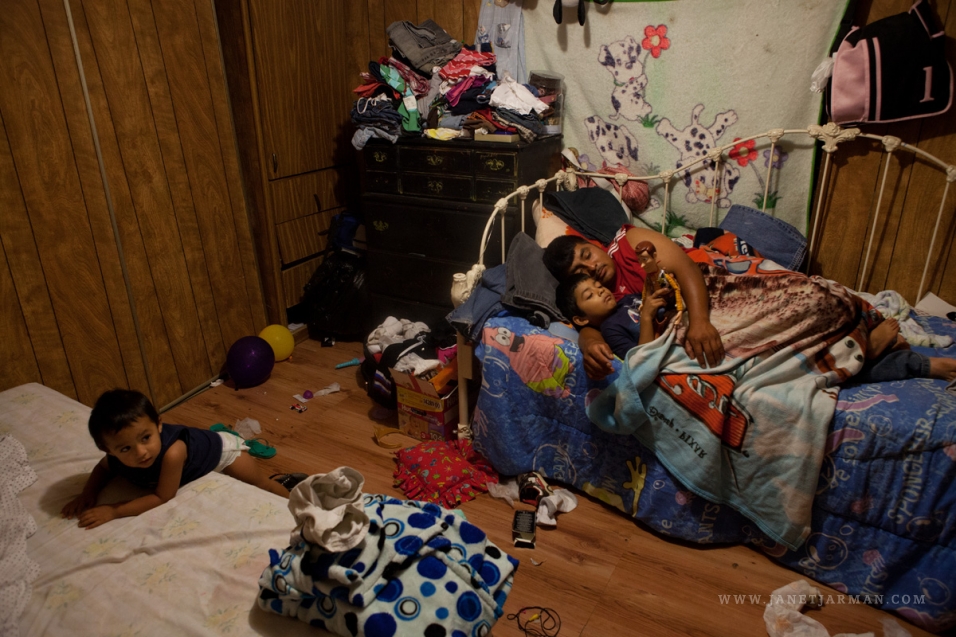
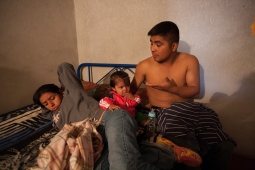
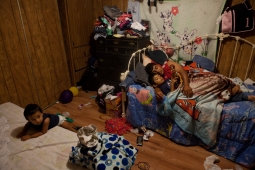
Texas, U.S.A. 2011 – Andrés cuddles with Carlos and watches cartoons in the bedroom where he, Marisol and their three children sleep (Luis pictured on left).
-
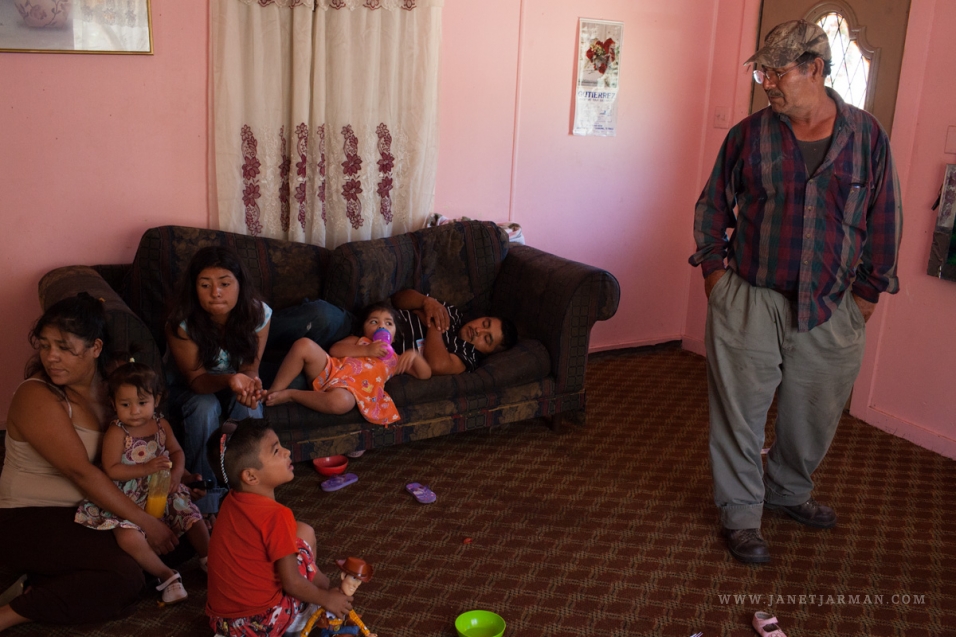
Texas, U.S.A. 2011 – Marisol’s biological father, Vinicio, pays a visit while they all watch TV at Sandra’s house. Marisol and her sisters have learned to tolerate their father, years after he and their mother divorced during their childhood; nonetheless, they don’t go out of their way to spend time with him.
-

Texas, U.S.A. 2011 – Marisol and Andrés take their children to watch CARS 2 in 3D at a local cinema. Going out as a family is a rare occasion, due to their financial limits. Normally, they either visit Marisol’s sisters at their home or go to the mall for ice cream or possibly to their favorite Chinese buffet.
-
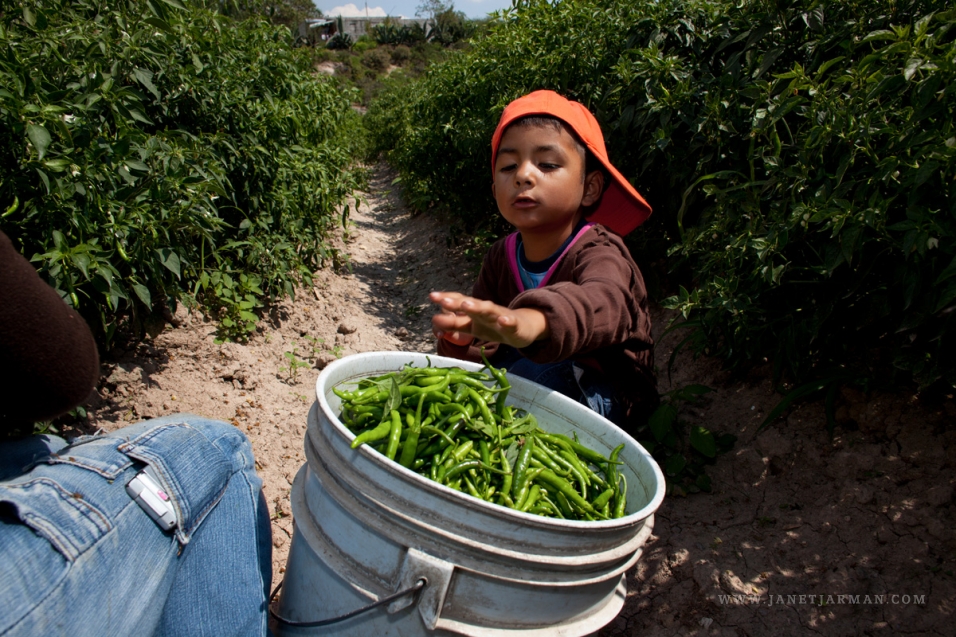
Hidalgo, Mexico, 2011 – Carlos joins his grandparents and 20 other villagers as they harvest chili. He adores his grandfather and loves his summer adventures in the Mexican countryside where they live. He told his teachers in the United States once that he planned to move to Mexico permanently. The teachers promptly called Marisol to schedule a meeting to discuss these issues.
-
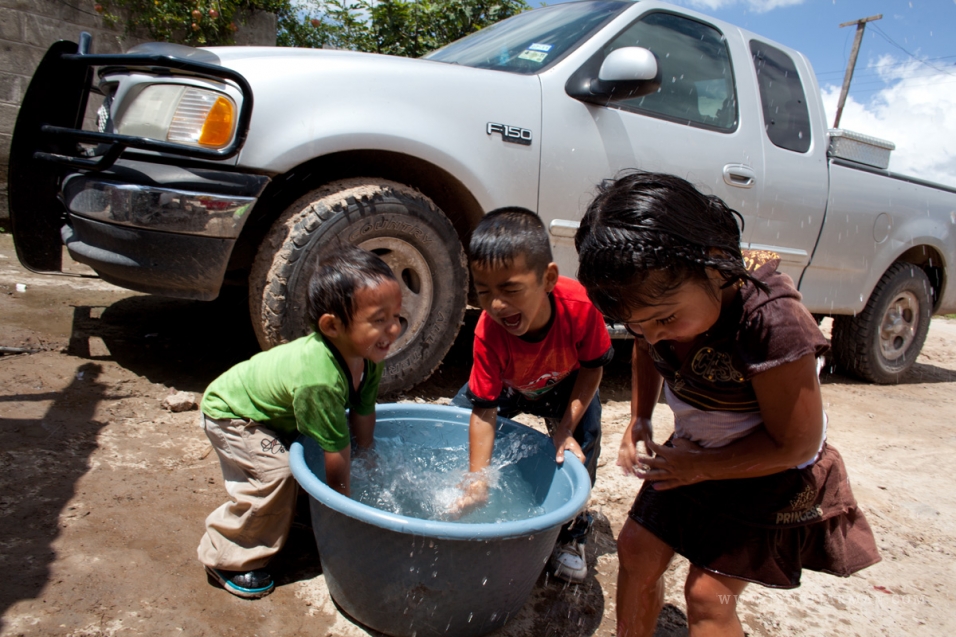
Hidalgo, Mexico, 2011 – While Marisol stays inside all day watching soap operas, Carlos, Anahi and Luis, entertain themselves for hours playing water games under the intense sun shaded by the truck Andrés bought with his savings from working in the United States. Going to Mexico for three weeks during the summer became a ritual for the children, giving Andrés’ parents hope that they would someday return to Mexico and live in the house that Andrés built.
-
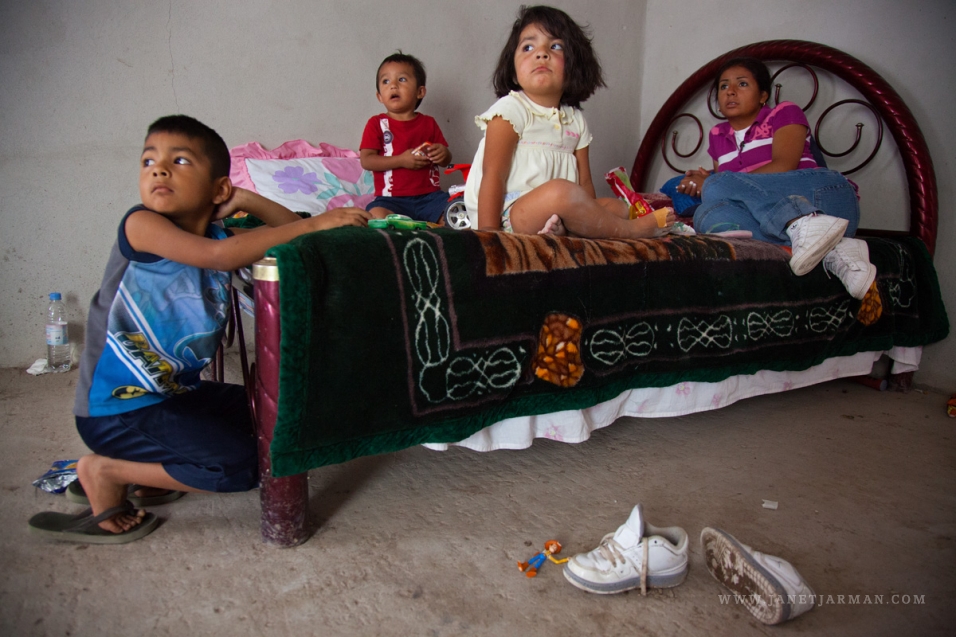
Hidalgo, Mexico, 2011 – Bored and counting the hours until she can return to the U.S., Marisol watches CARS 2 for the fifteenth time with her children, in the bedroom that will become hers, should she and Andrés ever return to Mexico to live permanently.
-
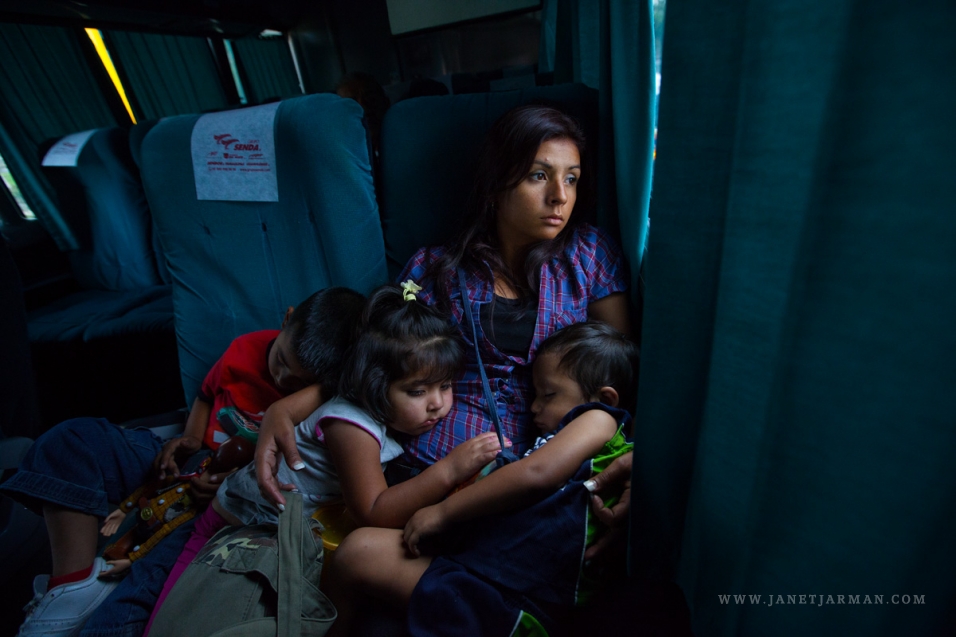
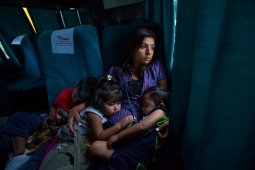
Querétaro, Mexico, 2011 - Marisol and her children endure a 28-hour bus ride from Mexico City to Dallas, Texas at the end of her three-week stay at her in-laws. Traveling by bus has become increasingly dangerous, and she vowed never to travel this way again. During a previous bus ride, gunmen came onboard. They robbed everyone but her. She believes they skipped her out of empathy that she was a young mother traveling alone with children.
-
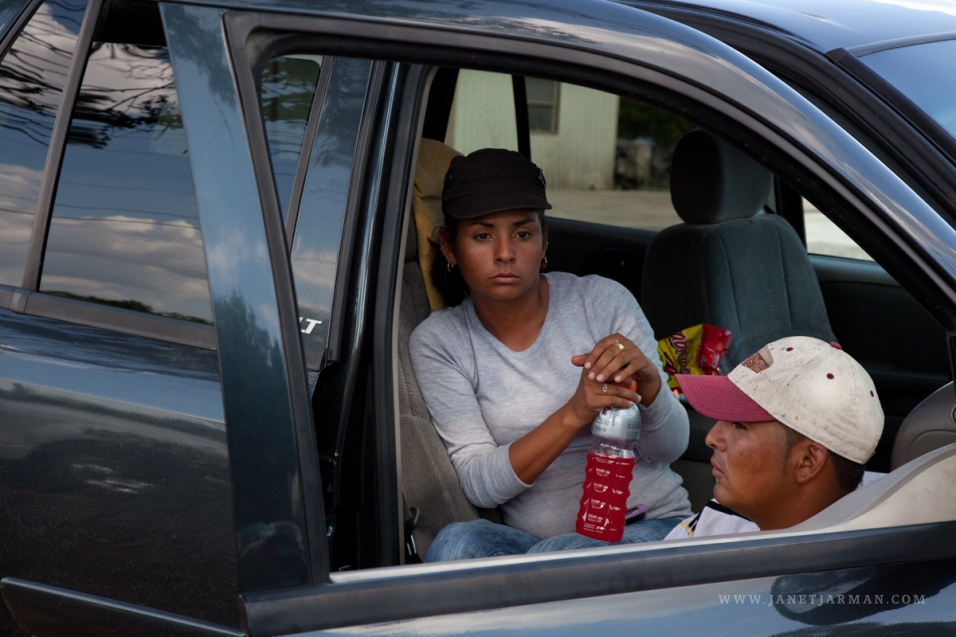
Texas, U.S.A, 2012 - During a break at the truck wash where they both work, Andrés begs Marisol to stay with him, but she said no. Tension had been brewing between the two in early August, and Andrés left her. She warned him not to come back. When he recognized that she was serious, he filed for a divorce in retaliation and convinced the police to forcibly take their three children from their house and give him custody. Devastated and furious, Marisol hired her own lawyers for every penny she had to get the kids back.
-
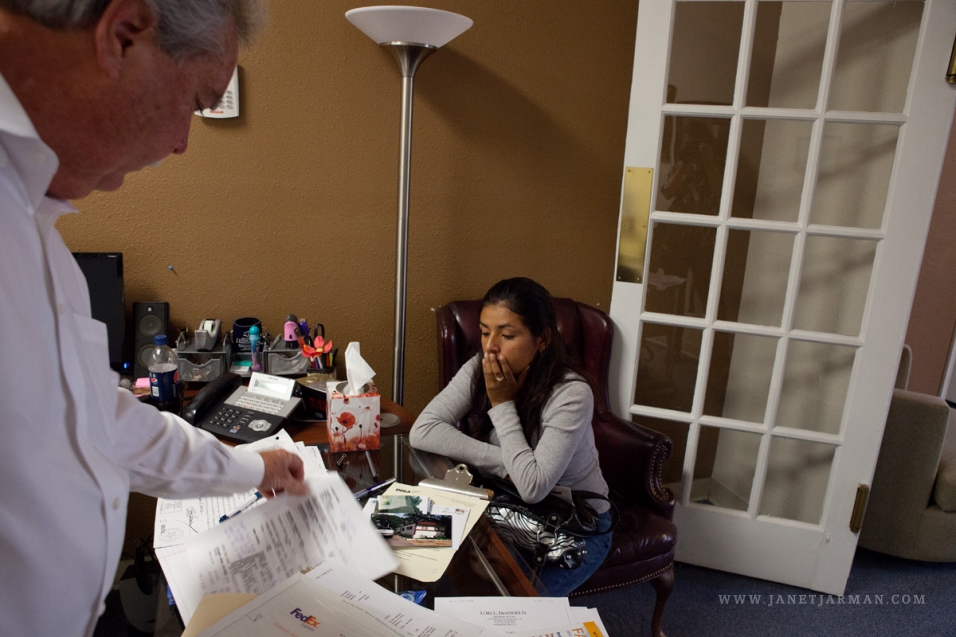
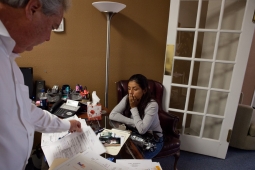
Texas, U.S.A, 2012 - Marisol explains details to her divorce lawyers during her first pre-hearing meeting with them. They charged her 5,000 dollars up front just to begin the case. Desperate to get her children back, she used all of her savings to pay the lawyers and borrowed money from her older brother for the remainder.
-
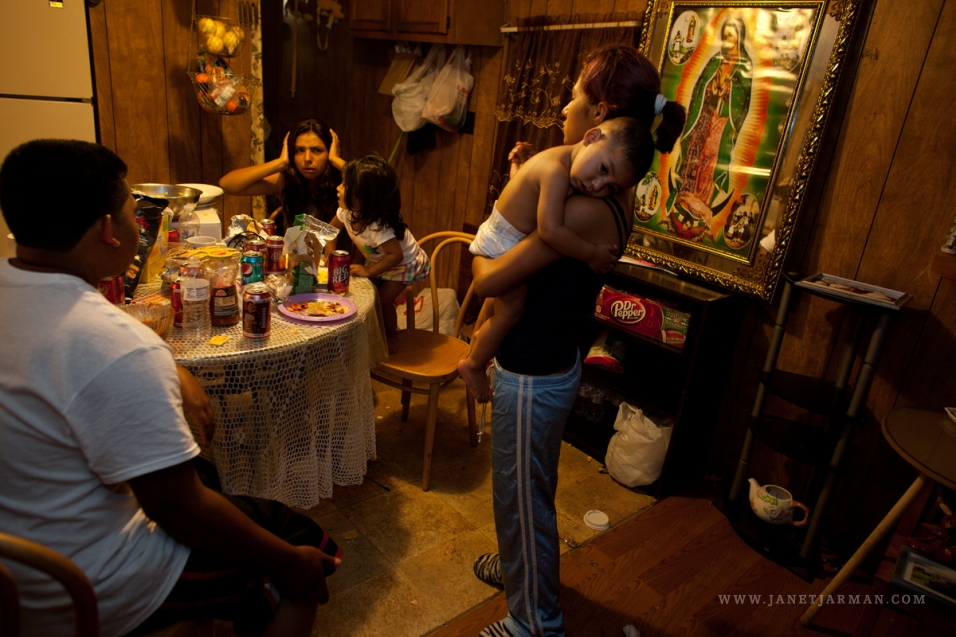
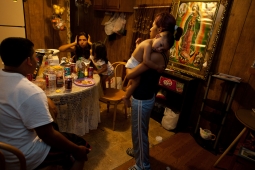
Texas, U.S.A, 2012 - Marisol (L) dines with her younger sister, Eloisa, and Eloisa’s two children and husband inside the trailer the sisters share in rural Texas. Marisol seemed at her wit's end, since for two weeks, her mother and sisters had been advising her about how to handle the divorce, driving Marisol to a state of exhaustion and mental numbness.
-
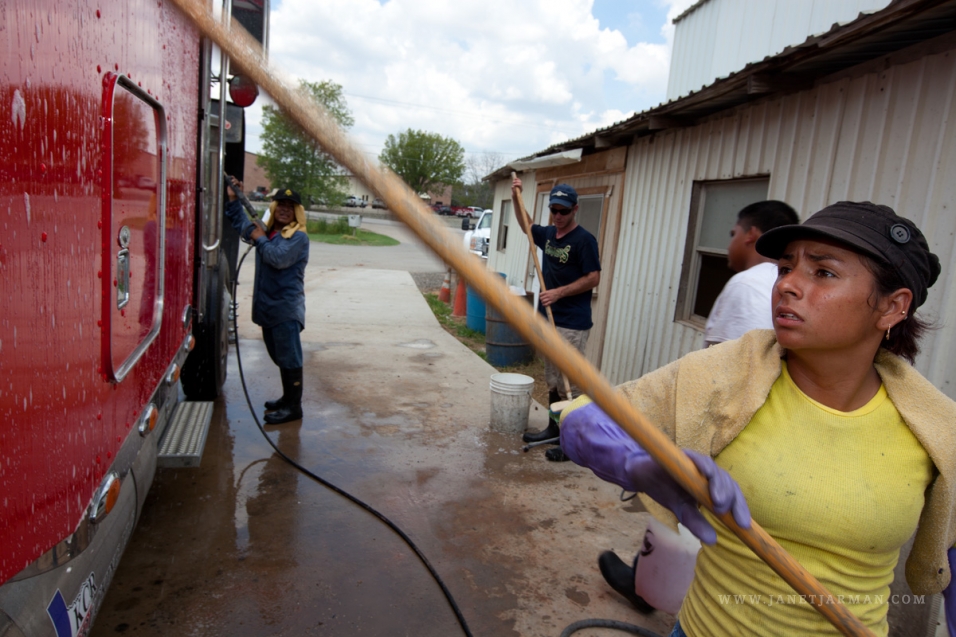
Texas, U.S.A. 2012 – Marisol continues to wash large industrial trucks with Andrés, despite their divorce proceedings. As the couple had more children, Marisol needed to start working. Although the acids used for cleaning burned her skin from time to time, she felt proud to make her own money. Her boss, a retired truck driver, trusted her and gave her the flexibility she needed to balance work with raising three children.
-
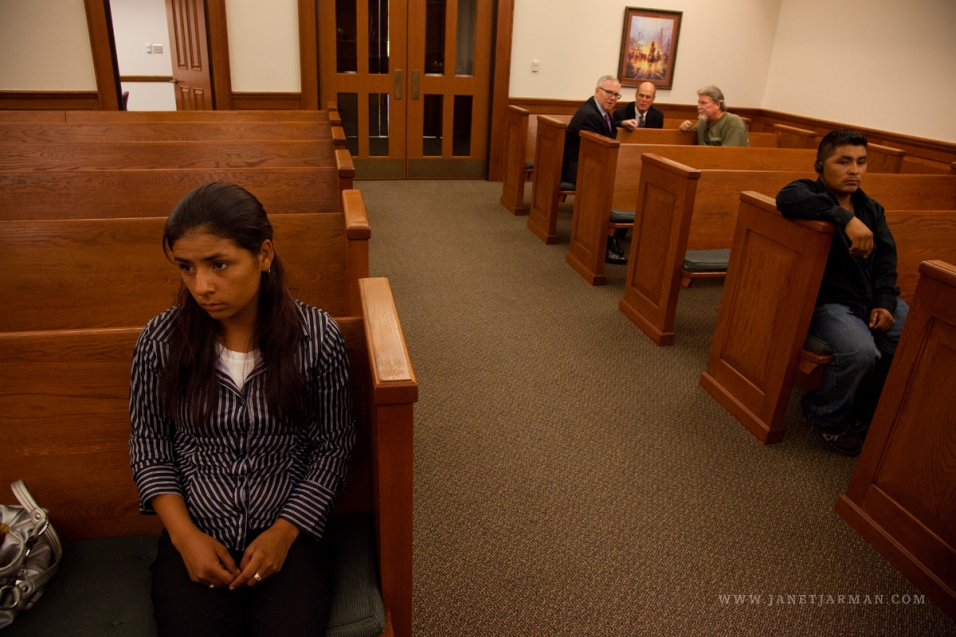
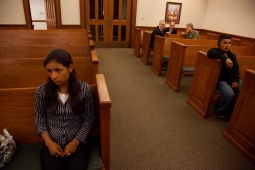
Texas, U.S.A. 2012 - Marisol and Andrés wait in court for their respective lawyers during their first divorce hearing, after Andrés sent police to take the children from Marisol. They settled, and the judge granted Marisol custody of the children, and visitation rights to Andrés. Their legal fees depleted all their savings.
-
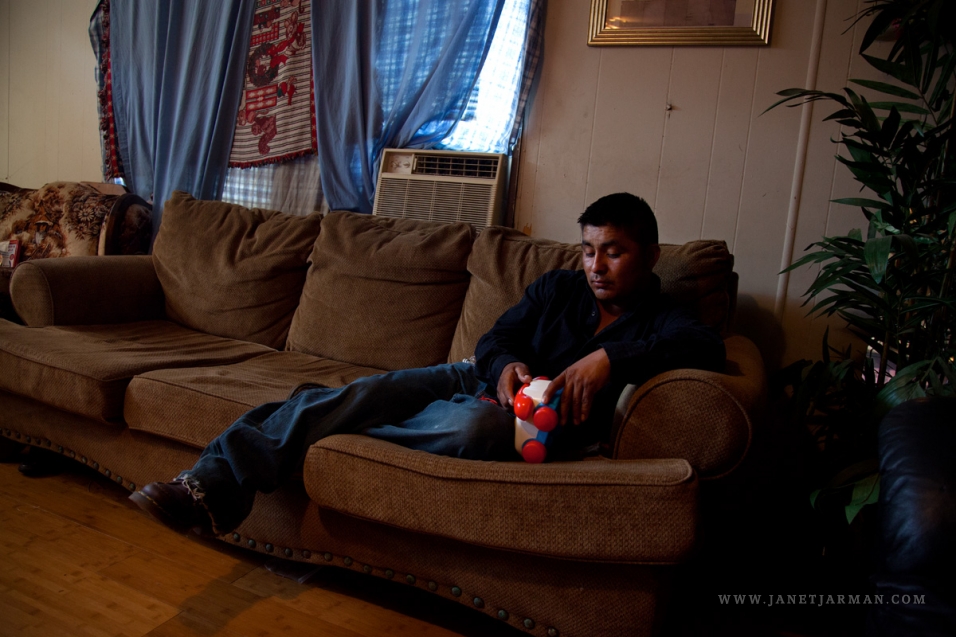
Texas, U.S.A. 2012 - Andrés is forlorn after handing the children back to Marisol following their divorce settlement. He felt like his life had fallen to pieces, and he hoped he and Marisol will be able to reconcile. His dreams of moving the family back to Mexico faded.
-
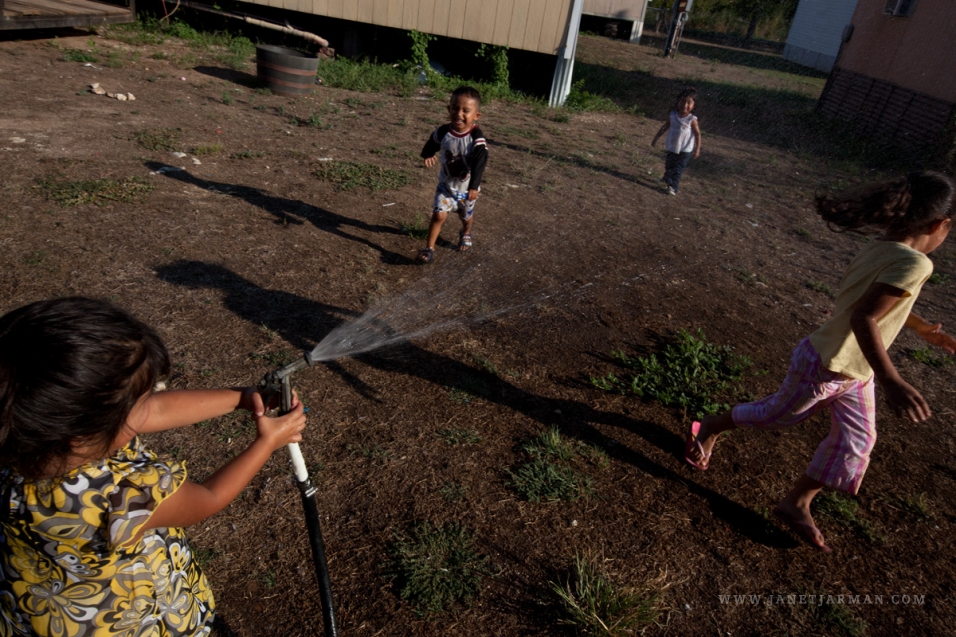
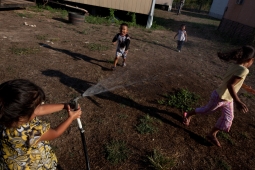
Texas, U.S.A, 2012 - Marisol's and Andrés' daughter, Anahi, enjoys spraying her cousins and siblings upon returning home following her parents’ divorce hearing. Andrés had convinced police to seize the children and give him temporary custody. After caring for the children for two weeks, he decided to settle with Marisol. She won permanent custody, granting visitation rights to him on Saturdays. He dreamed of winning her back. Marisol said it would never happen. One year later, the couple reconciled. They have a new home, and the children are thriving.


Marisol and The American Dream
Jarman made her first photograph of Marisol when the Mexican girl was eight years old, scavenging through waste in the fading afternoon light at the Matamoros municipal garbage site. Almost two decades later, Jarman is still photographing her.
During those years, Marisol and her family moved from Mexico to Florida and onwards to Texas. Marisol allowed Jarman to closely document her immigrant experience as she coped with new customs, discrimination and fear. Over time, the American Dream her family sought seemed to slip away, as they lost their home, and the parents divorced.
Through following the life of an individual over time, Jarman has tried to convey the numerous challenges experienced by thousands of Latino immigrants. She hopes that by bringing Marisol’s story to the attention of the general public, she can put a human face on the topic of immigration and contribute in a small way to making the debate a less contentious one, driven more by recognition of our common humanity than by hostility.
Resources
Pew Research Center Immigration Page
North Carolina Teachers Learn About Undocumented Immigrants Trough Remarkable Story | WUNC North Carolina Public Radio
Photos That Cross Borders and Challenge Perceptions The New York Times Lens Blog
Marisol and the American Dream: One Photographer’s 15-Year Project TIME Lightbox
The Wilson Center | Mexico Institute Research and Dialogue Institution
Littlest Immigrants, Left in Hands of Smugglers The New York Times
Mexico's Reverse Immigration The Washington Post